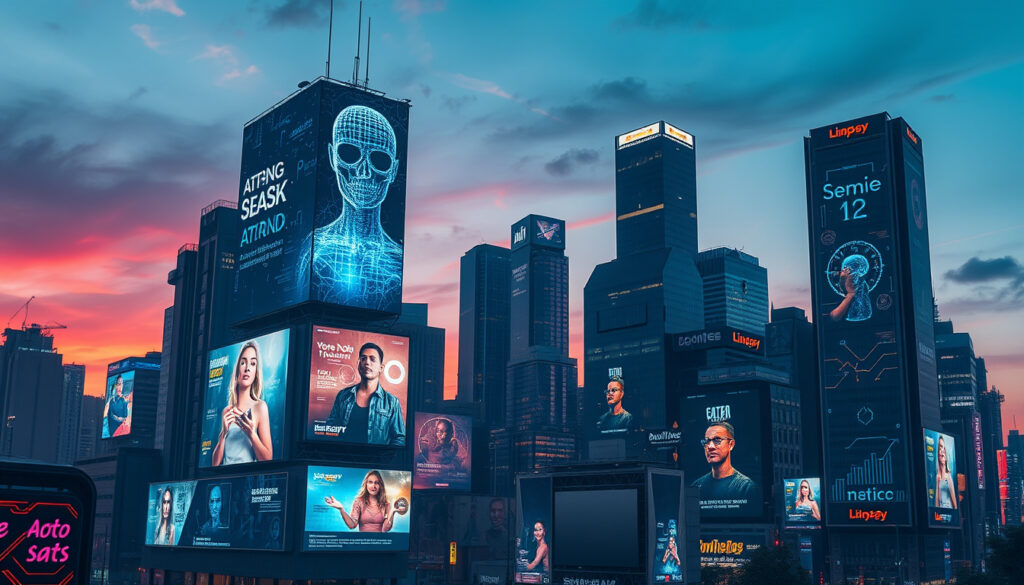
Digital Advertising News Today: Trends, AI, and Future Outlook
You’re scrolling through your feed and seeing ads that feel almost clairvoyant — showing you the product you muttered about yesterday. That’s the state of digital advertising today: faster, smarter, and a little unsettling. This report unpacks what’s actually new in digital marketing this week, from the $681 billion global ad spend machine to the classic rules that still guide strategy.
Global digital ad spend (2024): $681 billion (Statista estimate) ·
US digital ad revenue (2023): $225 billion (IAB report) ·
Programmatic ad spend share (2024): 88% of display ad spend (eMarketer)
Quick snapshot
- Geico Gecko steps into retail media (Marketing Dive (industry news outlet))
- EA launches advertising platform with enhanced offerings (Marketing Dive)
- Dentsu brings back 360i brand as social-first AI solution (Marketing Dive)
- Connected TV (CTV) ads (eMarketer (digital research authority))
- Retail media networks (eMarketer)
- Shoppable video (AI Digital (ad tech consultancy))
- Audio advertising (Bannerflow (ad creation platform))
- 70-20-10 budget allocation rule (Wikipedia (encyclopedia))
- 3-3-3 content rule (own, curate, promote) (Wikipedia (encyclopedia))
- 7 Ps of marketing (Wikipedia (encyclopedia))
- AI tools are augmenting, not replacing (Salesforce (CRM leader))
- Jobs least at risk: strategy, creativity, empathy (eMarketer)
- Emerging roles: AI ethics manager, programmatic specialist (Salesforce (CRM leader))
| Metric | Value | Source |
|---|---|---|
| Global digital ad spend (2024) | $681 billion | Statista (market data provider) |
| US digital ad revenue (2023) | $225 billion | IAB (advertising trade body) |
| Programmatic share of display ads (2024) | 88% | eMarketer |
| Marketers using AI tools (2025) | 62% | Salesforce (State of Marketing report) |
| Expected CTV ad spend growth (2025) | +18% | eMarketer |
The numbers confirm that ad spend is migrating rapidly toward programmatic and connected TV channels — and marketers who ignore this shift risk falling behind.
What’s new in digital marketing today?
This week’s digital marketing news is dominated by three moves: Geico pushing its iconic Gecko into retail media, Electronic Arts launching a self-serve ad platform, and Dentsu resurrecting 360i as an AI-first social agency. These aren’t isolated press releases — they signal where the money is flowing.
Global digital ad spend hit $681 billion in 2024, per Statista (market data provider), with U.S. digital ad revenue reaching $225 billion according to the IAB (advertising trade body). Connected TV and retail media are the fastest-growing channels — eMarketer projects CTV ad spend will rise 18% this year.
- Geico Gecko in retail media: The insurer is testing programmatic ads inside retailer sites, a move that blends brand heritage with performance targeting. (Marketing Dive (industry news outlet))
- EA ad platform: The gaming giant now lets brands buy inventory directly inside its titles — from Madden to Apex Legends — with real-time dynamic creative. (Marketing Dive)
- Dentsu brings back 360i: The rebranded agency will focus on social-first strategies powered by generative AI, aiming to unify organic and paid content. (Marketing Dive)
Brands are moving from buying audience segments to buying moments — across CTV, retail walls, and gaming worlds. The platforms that let them measure real-time impact will win the next $100 billion.
The implication: Advertisers can no longer treat digital as a simple display funnel. The channel count is expanding, and so is the complexity of attribution.
What ads are trending right now?
If you’ve been served a shoppable video on your smart TV or heard a programmatic audio ad on Spotify, you’ve experienced the top trending formats of 2025. The shift is away from static banners and toward interactive, contextual placements.
Programmatic CTV ad spend is on track to exceed 87% of total CTV video ad spending by 2025, according to AI Digital (ad tech consultancy). Meanwhile, retail media networks — like Amazon Ads and Walmart Connect — are pulling spend from traditional search and social. eMarketer reports that retail media will grow 25% this year alone.
- Shoppable video: AI Digital highlights that dynamic, interactive formats across CTV and social now allow viewers to buy with a click without leaving the screen. (Source)
- Programmatic audio and DOOH: Bannerflow notes that programmatic buying is expanding beyond screens into audio ads and digital out-of-home (DOOH) billboards. (Bannerflow (ad creation platform))
- Native and in-feed ads: These remain dominant on social platforms, but now increasingly carry product tags and lead directly to checkout.
What is the most trending digital product right now?
AI chatbots — led by ChatGPT, Claude, and Perplexity — are the most trending digital product category. Smart home devices (smart speakers, video doorbells) and wearables (smart rings, AR glasses) follow closely. This matters for advertisers because these devices open new inventory: voice ads, ambient screens, and personalized push notifications.
The trend line is clear: every screen and every speaker is becoming an ad surface. Brands that plan for audio-first and zero-click interactions now will own the next wave of consumer attention.
What is the 70 20 10 rule in advertising?
Three classic frameworks still shape how many top marketers allocate budgets and content — even in an AI-driven world. Understanding them helps decode why some campaigns feel safe and others break through.
The 70-20-10 rule, popularized by Google and often cited by Think with Google (Google’s marketing resource), suggests splitting marketing spend: 70% on core initiatives that are proven performers, 20% on adjacent innovations that build on existing strengths, and 10% on high-risk, experimental projects that could define the future.
What is the 3 3 3 rule in marketing?
The 3-3-3 rule addresses content creation: one-third of content should be original (created by the brand), one-third curated (shared from other authoritative sources), and one-third promoted (boosting third-party content that aligns with the brand). It’s a discipline to avoid publishing bloat and focus on quality distribution.
What are the 7 P’s of marketing?
An expansion of the original 4 Ps (Product, Price, Place, Promotion) into People, Process, and Physical evidence. The Wikipedia entry on Marketing Mix provides a thorough breakdown. In digital advertising, People covers customer personas and support, Process refers to automated workflows (like programmatic buying), and Physical evidence is increasingly digital — like website UX and brand consistency across touchpoints.
The catch: These frameworks were designed for a linear, non-programmatic era. Applying them today requires translating “place” to omnichannel ad placements and “process” to real-time bidding algorithms.
Will AI replace digital marketers?
The short answer: not entirely, but the job is being rewritten. Salesforce’s State of Marketing report found 62% of marketers already use AI tools — mostly for ad bidding, audience segmentation, and creative optimization. Yet the same report says only 18% believe AI can replace strategic thinking.
Bannerflow describes a shift from using AI only for targeting toward letting AI control entire campaigns — adjusting bids, placements, and creative in real time based on live data. (Bannerflow (ad creation platform)) Platforms like The Trade Desk and Google Display & Video 360 already allocate ad spend via algorithms. Strategus (programmatic ad platform) confirms that AI is generating thousands of creative variations on the fly — testing headlines, CTAs, and images without human input.
Which jobs will AI not replace?
- Creative strategists who define brand voice and emotional narrative — AI can generate copy but lacks empathy and cultural sensing.
- Relationship managers who handle client trust and long-term campaign partnerships.
- Data interpreters who translate AI output into business decisions — the “why” behind the metrics.
- Ethics and compliance officers — as privacy regulation tightens, the need for human judgment on data usage grows.
AI will replace the marketer who only executes — but it will elevate the marketer who questions, tests, and interprets. The next five years will separate automation pilots from strategic architects.
The trade-off: Efficiency gains come with a loss of human nuance. Brands that lean entirely on AI risk sounding generic in a marketplace that increasingly rewards authenticity.
Where will digital marketing be in 5 years?
By 2030, three forces will reshape the discipline: full AI orchestration, privacy-first identity, and the collapse of the cookie. Every major forecast points in the same direction.
eMarketer predicts programmatic spend will account for over 90% of all digital display by 2027. Gartner (research and advisory firm) projects that 80% of marketers will have dedicated AI ethics roles by 2028. The cookieless transition — already underway with Google’s Privacy Sandbox — means contextual targeting, first-party data, and clean rooms will become the default.
What will a digital marketing role look like in the next 5 years?
- AI prompt engineer: Specialists who craft the inputs for generative ad creatives and campaign logic.
- Data privacy analyst: Ensuring compliance across dozens of state and international regulations.
- Programmatic strategist: More technical, less media-planning — closer to a data scientist role.
- Brand-to-machine liaison: A hybrid creative/tech role that translates brand guidelines into algorithmic rules.
The pattern: The marketer of 2030 will need both left-brain data comfort and right-brain narrative skill. Pure specialists — only creative or only analytics — will struggle. Versatility will be the premium.
Timeline signal
- 2024 Q4: Google rolls out AI-powered ad placements in Performance Max (Google Ads Help (official source))
- 2025 Q1: EA launches advertising platform with enhanced brand offerings (Marketing Dive)
- 2025 Q1: Dentsu rebrands 360i as a social-first, AI-optimized agency (Marketing Dive)
- 2025 (ongoing): UK redraws youth marketing strategies as social platforms lose under-16 users (eMarketer)
The implication: These milestones show the industry moving from reactive ad placements to AI-orchestrated, channel-agnostic campaigns.
Confirmed facts vs. What’s unclear
Confirmed facts
- Global digital ad spend continues to grow at 10-12% annually (Statista)
- AI tools are already automating ad bidding and creative generation (Bannerflow)
- Retail media networks are the fastest-growing ad channel (eMarketer)
What’s unclear
- Whether AI will fully replace mid-level digital marketing roles within 5 years
- How much ad budgets will shift from social to CTV in 2025-2026
- Which specific marketing rules (70-20-10, 3-3-3) will remain most relevant
Expert perspectives
Advertisers in 2025 are shifting from using AI only for targeting toward letting AI control entire campaigns — adjusting bids, placements, and creative in real time based on live data.
— Bannerflow report on programmatic trends (Source)
AI already plays a prominent role in marketing activities and is reshaping programmatic advertising — platforms like The Trade Desk and Google DV360 use algorithms to allocate spend in milliseconds.
— Strategus analysis of AI in programmatic (Source)
The rebrand of 360i signals that agencies must integrate social and AI natively, not as add-on services, to stay relevant in 2025.
— Marketing Dive editor comment on Dentsu’s move (Source)
The editorial verdict is not that AI will replace marketers — it’s that the marketer who refuses to learn the new tools will be replaced by one who does. For digital marketers in the U.S., the choice is clear: invest in AI literacy and human-centric strategy, or risk being outpaced by competitors who combine both.
Related reading: Stock Market Today Live Chart
For a deeper dive into one of the most measurable digital marketing models, check out this comprehensive pay-per-click advertising guide for 2025.
Frequently asked questions
What are the most effective digital ad formats in 2025?
Connected TV, retail media, shoppable video, and programmatic audio. Bannerflow notes that DOOH and audio are the fastest-growing formats in programmatic.
How do retail media networks change advertising?
They let brands advertise directly on retailer sites (Amazon, Walmart) using first-party purchase data. eMarketer calls retail media the fastest-growing ad channel, with 25% growth in 2025.
What is the difference between programmatic and direct ad buying?
Programmatic automates the transaction using real-time bidding; direct buying involves manually negotiating a fixed price with a publisher. Programmatic now accounts for 88% of display ads.
How is AI changing social media advertising?
AI powers dynamic creative optimization, audience targeting, and automated budget allocation. Salesforce reports 62% of marketers already use AI for social campaigns.
What is the 70-20-10 rule and how do I apply it?
It’s a budget allocation framework: 70% on proven tactics, 20% on adjacent experiments, 10% on moonshots. The rule helps balance risk and consistency.
Will digital marketers need to learn coding for AI tools?
Not necessarily, but understanding how to write prompts for generative AI and interpret data dashboards will become baseline skills. Many platforms now offer no-code AI features.
What are the top digital marketing conferences in 2025?
Programmatic I/O, Advertising Week, and DMEXCO remain key. Many now feature AI-focused tracks and hands-on workshops.
More related posts
 1.5 as a Fraction: 3/2 in Simplest Form
 Is Luke Combs’ ‘Where the Wild Things Are’ a Real Story
 Art Institute of Chicago – Complete Visitor Guide Tickets Hours Parking
 New Movies Out Now: Top Releases in Theaters & Streaming 2026
 Augusta National Golf Club: Costs, Membership & Masters Access
 Where Can I Watch Yellowstone? Netflix, Prime, Paramount+ Guide
 Screech Saved by the Bell – Dustin Diamond’s Life and Death