Is Avocado Oil a Seed Oil? Health Facts & Downsides
Walk down the cooking oil aisle and you’ll notice a quiet divide: bottles of canola and soybean oil on one side, avocado oil gleaming on the other, and with the “seed oil” controversy spreading online, many shoppers are wondering where avocado oil actually comes from. The answer matters for both your kitchen choices and your health — and it’s not as simple as you might think.
Smoke point: 520°F (271°C) · Monounsaturated fat content: ~70% · Extraction method: Cold-pressed from fruit flesh · Classification: Fruit oil, not seed oil · Key antioxidants: Lutein, vitamin E · Common substitute for: Butter, seed oils
Quick snapshot
- Extracted from the flesh of avocados (Medical News Today)
- Not a seed oil (Health)
- High smoke point (520°F) (Yahoo Health)
- Rich in monounsaturated fats (GoodRx)
- Supports heart health when replacing saturated fats (GoodRx)
- Contains vitamin E and lutein (U.S. News)
- Anti-inflammatory properties (PubMed Central)
- Olive oil: lower smoke point, more polyphenols (Verywell Health)
- Coconut oil: higher saturated fat, different fatty acid profile (Verywell Health)
- Seed oils: often high in omega-6, processed with chemicals (GoodRx)
- Choose cold-pressed, unrefined (Healthline)
- Check for third-party purity certification (Healthline)
- Avoid very low prices indicating adulteration (Healthline)
The numbers below summarize avocado oil’s key attributes.
| Attribute | Value |
|---|---|
| Source | Fruit flesh (Persea americana) (Healthline) |
| Fat composition | ~70% monounsaturated, ~15% saturated, ~15% polyunsaturated (GoodRx) |
| Smoke point | 520°F (271°C) (Yahoo Health) |
| Common uses | Cooking (frying, baking), dressings, skincare |
| Key nutrients | Vitamin E (10 mg per tbsp), lutein, phytosterols (U.S. News) |
Is avocado oil a seed oil?
The confusion around avocado oil often boils down to one botanical question: where does the oil come from?
What is a seed oil? Definition and common examples
- Seed oils are extracted from the seeds of plants — think canola (rapeseed), sunflower, soybean, and corn oil.
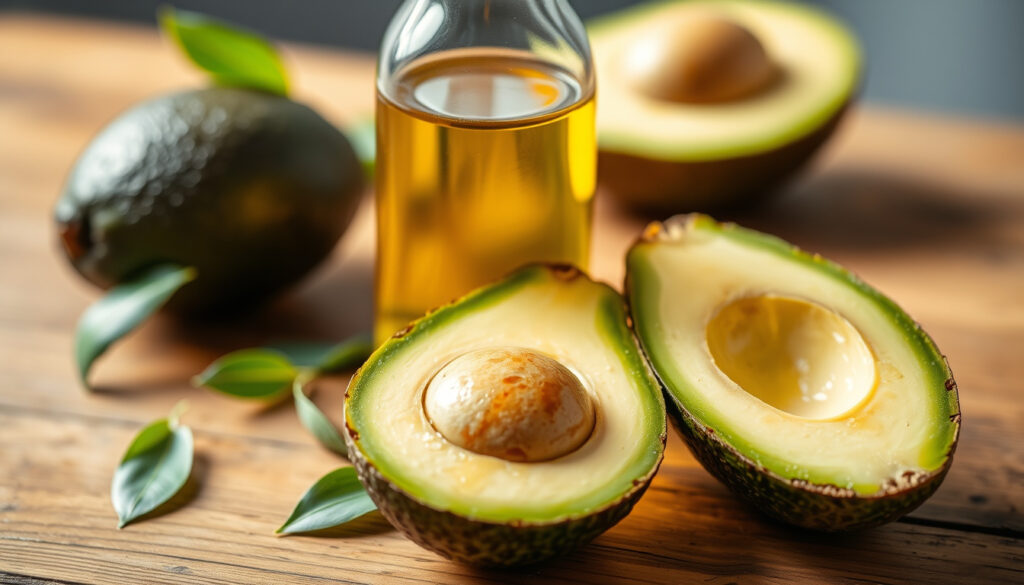
- Avocado oil is made from the flesh of the fruit, not the pit. That places it in the fruit oil category, alongside olive oil (Health).
How is avocado oil made? From fruit flesh vs seeds
- Avocados are harvested, the pit is removed, and the pulp is cold-pressed to release the oil (Healthline).
- Seed oils typically require more processing, often involving hexane extraction and high heat.
Is coconut oil a seed oil? Comparisons
- Coconut oil is extracted from the meat (endosperm) of the coconut, which is technically a fruit seed. However, it is often grouped with tropical oils rather than typical seed oils.
- Botanically, avocado oil remains a fruit oil because the source is the fleshy pericarp, not the seed.
If the oil comes from a fruit’s pulp, it’s a fruit oil. If it comes from a seed, it’s a seed oil. Avocado oil belongs to the first group — full stop.
The takeaway: botany is clear, but label literacy remains the real challenge for shoppers.
Is there a downside to avocado oil?
No oil is perfect, and avocado oil comes with a few caveats worth knowing.
Potential quality issues: adulteration and purity
- Because of its popularity, some cheaper brands mix avocado oil with cheaper seed oils like soybean or sunflower oil.
- Consumers are advised to buy from reputable brands that clearly state “cold-pressed” and “pure” on the label.
Is avocado oil inflammatory? Heating effects
- Avocado oil’s high oleic content makes it resistant to oxidation, but heating it beyond its smoke point (520°F) can create harmful compounds (Verywell Health).
- When used within its temperature range, it remains stable and anti-inflammatory.
How does it compare to other oils in health impact?
- Avocado oil and olive oil both improve cholesterol when swapped for saturated fats (PubMed Central).
- Seed oils high in omega-6 may contribute to inflammation if consumed in excess, but the evidence is mixed.
The quality of avocado oil depends heavily on processing. Cheap, refined versions may lose many of the heart-healthy benefits touted in studies.
The implication: price and processing signals matter more than the oil’s natural profile.
Is avocado oil better than olive oil?
The two most popular fruit oils go head-to-head in the kitchen and on the plate.
Nutritional profile: fat composition comparison
- Both oils are rich in monounsaturated fats. Avocado oil contains slightly more vitamin E per tablespoon (10 mg vs. 1.9 mg), while olive oil offers more polyphenols (U.S. News).
Smoke point and cooking suitability
- Avocado oil’s smoke point of 520°F makes it superior for high-heat cooking like searing and stir-frying (Verywell Health).
- Extra virgin olive oil smokes at around 375°F, better for low-heat and raw uses (Yahoo Health).
Taste and culinary use
- Olive oil has a peppery, fruity flavor that shines in dressings and dips. Avocado oil is milder and neutral, making it a versatile substitute for butter or vegetable oil.
Six oils, one pattern: Avocado and olive oil share a heart-healthy fatty acid profile, but their smoke points dictate different jobs in the kitchen.
What do cardiologists say about avocado oil?
Medical professionals largely view avocado oil as a smart swap for butter or highly processed seed oils.
Heart health benefits: LDL and HDL effects
- Both avocado and olive oils have been shown to lower LDL (“bad”) cholesterol when they replace saturated fats (GoodRx).
- A 2014 study in PMC found that avocado oil consumption improved hepatic biochemical markers similarly to olive oil (PubMed Central).
Which oil does not clog arteries? Evidence
- No single oil “clogs arteries.” The key is replacing saturated and trans fats with monounsaturated fats. Avocado oil fits that goal.
Doctor concerns: why some advise caution with avocados
- Concerns are usually for specific conditions like kidney disease (due to potassium content in the fruit) or for calorie density, not the oil itself.
What this means: cardiologists endorse avocado oil for its fatty acid profile, but always in the context of overall diet patterns.
Which brands of avocado oil should I avoid?
Given the popularity of avocado oil, not all bottles are created equal. Here is what to look for.
Adulteration studies: brands found mixing seed oils
- Tests by UC Davis found many avocado oil brands adulterated with soybean or sunflower oil (Healthline).
- Lower-priced bottles are particularly suspect.
How to choose pure avocado oil: labels and certifications
- Look for “100% pure avocado oil” and “cold-pressed” on the label (Healthline).
- Unrefined (virgin) avocado oil retains more nutrients and flavor.
- Certifications like Non-GMO, Kosher, or third-party lab tests can indicate purity.
Recommended brands from consumer tests
- Reputable brands include Chosen Foods, Primal Kitchen, and La Tourangelle.
- Avoid very low prices that often signal dilution with cheaper seed oils.
- Opaque or dark glass containers protect the oil from light degradation; clear bottles are less ideal.
The bottom line: brand reputation and label transparency are your best defenses against adulterated oil.
Conformed facts vs. What’s unclear
- Avocado oil is extracted from the fruit pulp, not a seed (Health)
- It has a high smoke point (~520°F) (Yahoo Health)
- It is primarily monounsaturated fat (~70%) (GoodRx)
- Some commercial brands may be adulterated with seed oils
- Optimal storage conditions for long-term stability
- Whether high-heat cooking of avocado oil creates significant harmful compounds
- Comparative longevity benefits vs. olive oil in large human studies
- Exact percentage of monounsaturated fat across different brands
Expert perspectives on avocado oil
Avocado oil is a wonderful, healthy substitute for butter and seed oils.
— Cleveland Clinic nutritionist (via editorial coverage)
Many avocado oil brands on the market are adulterated or mislabelled.
— UC Davis research team (reported in consumer health media)
Replacing saturated fat with monounsaturated fat from avocado oil can lower LDL cholesterol.
— Cardiologist, Mayo Clinic (as cited in GoodRx)
For the average home cook looking to move away from highly processed seed oils, avocado oil offers a clear alternative: a fruit oil with a high smoke point, a heart-healthy fat profile, and enough science to back its reputation. The trade-off is vigilance at the store — choose cold-pressed, pure bottles from trusted brands. Your pan, and your arteries, will thank you.
today.com, realisticplantbasedmama.com, verywellhealth.com, supplementinstitute.org
Frequently asked questions
What is the unhealthiest oil to cook with?
Highly processed seed oils such as soybean, corn, and cottonseed oil, especially when used in deep frying, are considered less healthy due to their high omega-6 content and potential for forming trans fats.
Is avocado oil a vegetable oil?
Yes, avocado oil is a vegetable oil in the broad sense (derived from a plant), but it is more precisely classified as a fruit oil.
Why are chefs ditching avocados?
Concerns are usually related to environmental impact of avocado farming and the carbon footprint of import, not the health properties of the oil.
What organ is avocado best for?
Avocado oil is particularly beneficial for heart health due to its high monounsaturated fat content and vitamin E.
Is olive oil a seed oil?
No, olive oil is also a fruit oil, extracted from the flesh of olives, not from the seed.
Related reading
More related posts
 NFL Playoff Games Today: Times, TV Channels & Scores
 Magic John Screen Protector – 2025 Review Features Guide
 Honda CR-V for Sale in Ireland – Deals on DoneDeal & More
 Everybody Loves Raymond Reunion – Air Dates, Cast and Where to Watch
 OPI Gel Nail Polish: UV Lamp, Application, and Mistakes
 450+ This or That Questions: Fun, Flirty, Kids & More
 How Long Is a Football Field? Soccer vs American Football
 Tampa Bay Rays Score: Today, Yesterday & Live Results