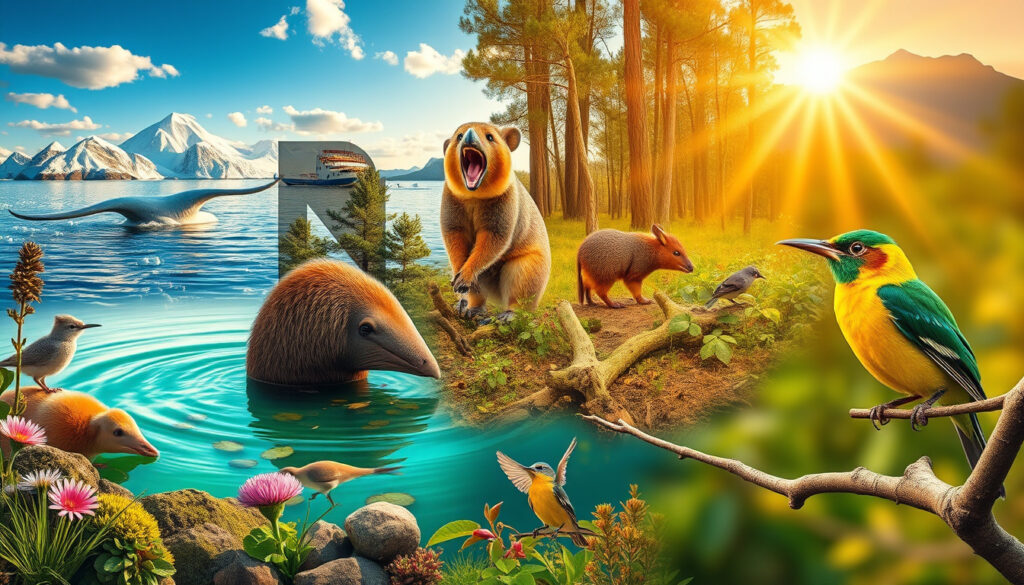
Animals That Start With N – Complete List With Pictures And Facts
The letter N introduces an extraordinary diversity of animal life, from the frozen waters of the Arctic to the sun-baked savannas of Africa. Mammals, birds, reptiles, amphibians, fish, and invertebrates all share this starting letter, creating a list that spans ecosystems across every continent and ocean. Compilations of animals beginning with N routinely include more than 70 distinct species, ranging from the iconic narwhal—often called the unicorn of the sea—to the diminutive honey possum of southwestern Australia.
This diversity makes N one of the more productive letters for animal enthusiasts, students, and anyone curious about the natural world. Whether searching for household pets, exotic wildlife, or creatures suitable for educational content, the N category offers options across every major animal group. The variety extends from apex predators like the Nile crocodile to unassuming invertebrates like the nematode, found in soils and waters worldwide.
Animals That Start With N
The broadest collection of N animals draws from multiple taxonomic categories, each representing distinct evolutionary lineages and ecological roles. Comprehensive lists compiled from wildlife publications and animal databases consistently feature certain species as standout entries, offering a reliable starting point for exploration.
The four animals featured below represent the most frequently cited species across animal directories. Each has earned its place through distinctive characteristics, wide recognition, or ecological significance.
| Animal | Scientific Name | Habitat | Key Feature |
|---|---|---|---|
| Narwhal | Monodon monoceros | Arctic waters | Spiral tusk up to 3 meters |
| Naked Mole Rat | Heterocephalus glaber | East African burrows | Eusocial colony structure |
| Newt | Pleurodelinae subfamily | Ponds, streams (UK/Europe) | Vibrant breeding colors |
| Numbat | Myrmecobius fasciatus | Australian eucalyptus woodlands | Striped fur, termite diet |
Mammals Starting With N
Mammals occupying the N category demonstrate remarkable adaptability, thriving everywhere from polar ice to tropical forests. The narwhal holds a special place in cultural imagination, its long spiral tusk inspiring legends about unicorns. This toothed whale inhabits the cold Arctic waters of Canada, Greenland, Norway, and Russia, diving to depths exceeding 1,800 meters to feed on fish, squid, and shrimp.
In complete contrast stands the naked mole rat, a hairless rodent adapted to life underground. Native to the grasslands of East Africa, these animals live in eusocial colonies similar to ants, with a single breeding queen and specialized worker castes. Their resistance to pain and cancer has made them valuable subjects in medical research.
The numbat represents one of Australia’s most distinctive marsupials. Unlike most marsupials, this anteater is diurnal and feeds exclusively on termites, which it extracts from decaying wood using its long, sticky tongue. Orange and white stripes pattern its fur, helping it blend into the eucalyptus woodlands where it makes its home.
Other notable mammals include the nyala, an African antelope with striking spiral horns found in eastern and southern woodlands, and the nilgai (or blue bull), India’s largest antelope species, considered sacred within Hinduism. The nutria, also known as the coypu, originated in South America but has become invasive in wetlands across North America, Europe, and Asia due to escape from fur farms.
Birds Beginning With N
Bird species starting with N span nocturnal hunters and melodious songsters. The nightingale holds an iconic place in literature and music, celebrated for its powerful, melodic song delivered during nighttime hours across European woodlands and gardens.
The northern cardinal brings vivid color to North American landscapes with its brilliant red plumage, while the nighthawk and nightjar families represent diverse groups of nocturnal insectivores. Nightjars, comprising approximately 100 species worldwide, have evolved exceptional camouflage that allows them to rest unnoticed on forest floors and grasslands during daylight hours.
Reptiles, Amphibians, and Fish
Reptiles and amphibians contribute their own notable entries to the N list. The Nile crocodile stands as Africa’s largest predator, capable of delivering a bite force exceeding 5,000 psi as it hunts fish and mammals along rivers and lakes. In contrast, the newt represents gentle pond-dwellers across Europe, displaying vibrant colors during spring breeding season.
Marine life adds further variety through the needlefish with its elongated beak, the neon tetra beloved in home aquariums, and the nautilus, a living fossil with a chambered shell inhabiting deep Indo-Pacific waters. The nurse shark, a docile bottom-dweller, frequently encounters divers at coral reefs throughout the Atlantic and eastern Pacific.
- Comprehensive animal directories list between 10 and 77 distinct species starting with N
- Mammals and birds dominate initial search results, while invertebrates like the nudibranch add unexpected diversity
- Most listed animals have verified habitats and conservation statuses from multiple sources
- Emoji-enhanced lists and Spanish translations represent common search variations
- Several N animals face habitat loss, with the numbat classified as endangered
- Both aquatic and terrestrial species appear across the letter’s complete taxonomy
Animals That Start With N for Kids
Children often connect with animals through memorable characteristics, and N offers plenty of memorable candidates. The narwhal’s tusk makes an immediate impression, described in kid-friendly terms as similar to a unicorn’s horn poking through the water. Its Arctic home and fish-based diet round out basic facts suitable for young learners.
The naked mole rat intrigues children with its wrinkly, pink appearance and unusual lifestyle. Explaining that these rodents live underground like tiny bees—with a queen, workers, and soldiers—captures young imaginations more effectively than simply noting their scientific classification.
A single naked mole rat colony can contain up to 300 individuals, all working together to maintain their underground tunnels and care for the queen’s offspring.
The numbat provides another excellent entry point, combining the familiar concept of an anteater with unique Australian characteristics. Its striped fur and termite diet translate well to classroom discussions about habitats and food chains.
Simple N Animals for Young Learners
- Narwhal — the whale with the unicorn-like tusk
- Naked Mole Rat — the wrinkly rodent that lives underground like bees
- Numbat — the striped Australian anteater
- Nightingale — the bird that sings beautiful songs at night
- Newt — the colorful salamander that lives near ponds
The How Great Thou Art lyrics have long referenced nature’s wonder, connecting generations of listeners to the natural world celebrated in wildlife education. This tradition of connecting art, music, and nature helps children develop lasting appreciation for animals like those beginning with N.
Animals That Start With N Emoji and Visuals
Visual representations through emoji and photography enhance engagement with N animals across digital platforms. The narwhal commonly appears alongside the unicorn emoji 🦄, reflecting its legendary appearance. Naked mole rats pair with the rat emoji 🐀, while nudibranchs—with their vivid neon colors and intricate patterns—provide striking subjects for underwater photography.
Images of narwhals typically capture their distinctive tusks piercing the water’s surface, often photographed from below to emphasize the spiral structure. Naked mole rat photographs reveal their pink, wrinkled skin and prominent incisors. Nudibranch images showcase the extraordinary diversity of their coloring, ranging from electric blue to brilliant orange against reef backgrounds.
When searching for N animal imagery, adding habitat keywords (Arctic, reef, forest) alongside the animal name typically yields the most relevant results from photography databases and wildlife archives.
The numbat presents photogenic potential through its distinctive stripes and bushy tail, usually photographed in eucalyptus woodland settings where these marsupials forage for termites during daylight hours.
Photography and Educational Resources
Wildlife photography from sources like National Geographic’s animal archives provides high-quality images suitable for educational projects and presentations. These resources maintain editorial standards ensuring scientific accuracy alongside visual appeal.
Animals That Start With N in Spanish
Spanish translations for animals beginning with N follow predictable patterns while introducing some language-specific variations. The narwhal becomes narval, retaining its distinctive tusk imagery in the new language. The naked mole rat may appear as rata topo desnuda or use adopted English terminology in informal contexts.
Regional Spanish-speaking communities sometimes employ local names reflecting cultural relationships with wildlife. The ñandú, a flightless bird similar to the rhea, technically begins with the letter Ñ rather than N, but appears in related searches as Spanish speakers explore alphabetically adjacent entries.
- Narval (narwhal)
- Nutria (nutria/coypu)
- Nudibranquio (nudibranch)
- Nutria de río (river otter equivalents)
Spanish-language wildlife resources from conservation organizations provide additional context for these translations, connecting Spanish speakers with broader global conservation efforts while maintaining linguistic accessibility.
Conservation Status and Uncertainties
Most animals beginning with N maintain stable populations, though several species warrant conservation attention. The numbat faces ongoing habitat threats in its native Australia and carries an endangered classification from the IUCN Red List. The Hawaiian goose, known locally as the nene, similarly requires protection efforts following near-extinction in the mid-twentieth century.
Comprehensive source verification confirms the animals included in standard N lists. However, minor variations exist between compilations regarding borderline cases and marginally documented species. Scientific nomenclature evolves as researchers clarify taxonomic relationships, meaning some species names and classifications may shift as new evidence emerges.
Comprehensive N animal lists prioritize verified multicellular animals rather than microorganisms like Naegleria. Species counts vary between sources depending on inclusion criteria for domestic breeds, regional variants, and recently described populations.
Where to Learn More
Several authoritative resources support continued exploration of animals beginning with N. Wildlife magazines and natural history publications maintain updated species profiles with photography and research findings. Museum databases and conservation organization websites provide additional depth for specific species inquiries.
The Art Institute of Chicago has incorporated wildlife imagery into its educational programming, demonstrating how cultural institutions increasingly integrate natural history into broader learning initiatives.
Recommended Sources
Wildlife photography and species documentation continue to expand our understanding of global biodiversity, with particular growth in previously poorly documented regions.
— Wildlife conservation publications, 2024
Databases maintained by conservation groups track population trends and habitat requirements, offering valuable context for anyone researching specific species. The HowStuffWorks animal encyclopedia provides accessible introductions to individual species, while Discover Wildlife magazine offers deeper exploration for readers seeking more detailed accounts.
Exploring Other Letters
The diversity found under N invites curiosity about other alphabetical categories. Many educational resources organize animals alphabetically, creating natural pathways for extended exploration. Learning about creatures starting with A, B, or other letters builds familiarity with animal classification and naming conventions.
Alphabetical organization also reveals patterns in biodiversity—some letters host far more species than others, reflecting the evolutionary history embedded in scientific nomenclature. This approach proves particularly valuable for children developing taxonomic awareness and vocabulary.
What is the most famous animal starting with N?
The narwhal likely holds this distinction, frequently called the unicorn of the sea due to its long spiral tusk. It appears prominently in cultural references, wildlife documentaries, and educational materials.
How many animals start with the letter N?
Comprehensive compilations list between 70 and 80 distinct species, though exact counts vary depending on inclusion criteria for domestic breeds, regional variants, and recently described species.
What is the smallest animal that starts with N?
The honey possum (noolbenger) ranks among the smallest mammals beginning with N, weighing just a few grams. Nematodes, though technically not single animals, represent much smaller organisms.
Are there any endangered animals starting with N?
Yes. The numbat carries an endangered classification, while the Hawaiian goose (nene) has recovered from near-extinction but still requires active conservation management.
What habitat hosts the most N animals?
No single habitat dominates. N animals occupy environments from Arctic waters to tropical forests, Australian bushland to African savannas, reflecting the letter’s broad representation across taxonomic groups.
Can I find animals starting with N in my backyard?
This depends on location. Northern cardinals and nuthatches appear in North American gardens, while nightingales inhabit European woodlands. Local wildlife guides help identify region-specific species.
What invertebrate starts with N?
The nudibranch, a sea slug with over 2,300 species, represents one of the most colorful invertebrate groups beginning with N. Nematodes (roundworms) and nautilus shellfish also qualify.
More related posts
 Pikes Peak Cog Railway: Cost, Ride Time & Best Seats Guide
 Wizard of Oz at the Sphere: Cost, Cuts & Verdict
 Magic John Screen Protector – 2025 Review Features Guide
 Why Does He Do That? Summary, Signs, and Red Flags of Abuse
 Jim Parsons Movies and TV Shows: Complete Career Guide
 Wright-Patt Credit Union: Phone, Hours & Locations
 Sterling K Brown Movies and TV Shows – Complete Guide
 Jiu Jitsu Near Me: Best BJJ Gyms in Dublin (2025 Guide)