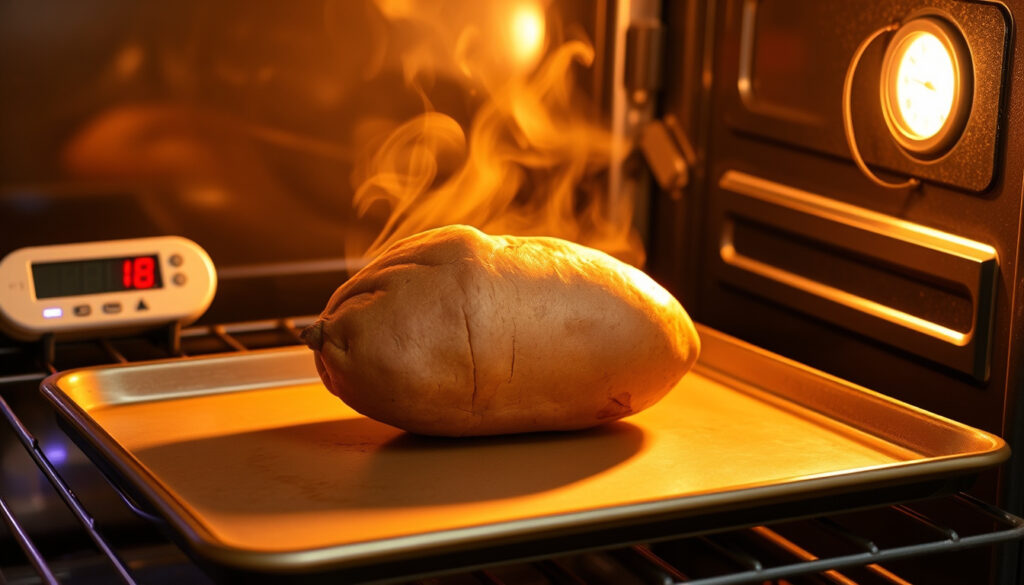
How to Bake a Sweet Potato: Time, Temperature, and Tip
There’s something quietly satisfying about pulling a perfectly baked sweet potato from the oven — its skin caramelized, the inside tender and sweet. But getting that result consistently means paying attention to temperature, timing, and a few simple techniques. Here’s what the evidence says about baking sweet potatoes to perfection, including the health trade-offs worth knowing.
Oven temperature: 375-425°F (190-220°C) ·
Average baking time: 45-60 minutes ·
Calories (medium baked): ~103 calories (with skin) ·
Beta-carotene content: ~1150 mcg per 100 g ·
Potassium per medium potato: ~542 mg
The standard method:
- Preheat oven to 400°F (200°C).
- Wash and pierce medium sweet potatoes (8–10 oz) 6–8 times with a fork.
- Place directly on the oven rack or on a parchment-lined baking sheet (unwrapped for crisp skin).
- Bake for 45–60 minutes, checking at 45 minutes.
- Test for doneness: fork should slide in easily, or internal temperature reaches 205–210°F (96–99°C).
This yields a crispy skin and creamy interior. For faster cooking, use the microwave-then-oven method (25 minutes total).
Quick snapshot
- Baking at 400°F for 45-60 minutes cooks a medium sweet potato thoroughly (Sunkissed Kitchen (recipe blog))
- Foil wrapping softens skin; unwrapped baking yields crispier skin (Cookie and Kate (food blog))
- Sweet potatoes are a good source of potassium and beta-carotene (NutritionFacts.org (nutrition research org))
- Optimal foil vs. no foil for all textures is subjective — no single method is proven best (Sunkissed Kitchen (recipe blog))
- Exact blood pressure reduction from sweet potato consumption lacks large-scale randomized trials (Sunkissed Kitchen (recipe blog))
- Average baking time for a medium sweet potato at 400°F is 45-60 minutes (YouTube recipe demonstration)
- Serve hot with toppings like butter, cinnamon, or yogurt
- Store leftover baked sweet potatoes in the fridge for up to 5 days
Five numbers define the standard sweet potato baking process:
| Metric | Value |
|---|---|
| Standard temperature range | 375-425°F (190-220°C) |
| Average baking time (whole) | 45-60 minutes |
| Doneness internal temperature | 205-210°F (96-99°C) |
| Potassium per medium sweet potato | ~542 mg (12% DV) |
| Beta-carotene per 100 g | ~1150 mcg |
The implication: these numbers give you a reliable starting point, but your oven and potato size will shift the window.
How long do you put a sweet potato in the oven to bake it?
Baking time at 375°F (190°C)
- At 375°F, a medium sweet potato (about 8-10 ounces) typically takes 50-60 minutes (Sunkissed Kitchen (home cooking blog))
- Larger potatoes may need up to 75 minutes; smaller ones around 40 minutes
Baking time at 400°F (200°C)
- 400°F is the most commonly recommended temperature: 45-60 minutes (Healing Tomato (recipe site))
- Check at 45 minutes and test with a fork
Baking time at 425°F (220°C)
- 425°F speeds up cooking: 35-45 minutes for medium potatoes (Love and Lemons (recipe blog))
- This temperature also produces a crispier skin
How to tell when it’s done
- Fork-tender: a knife or fork should slide in with little resistance
- Internal temperature of 205-210°F (96-99°C) confirms doneness (BBC Good Food (UK cooking authority))
What this means: time is flexible. Trust the fork test over the clock.
What temperature to bake sweet potatoes?
Standard oven temperatures for even cooking
- The most common range: 375-425°F (190-220°C) (The Kitchn (home cooking site))
- Lower temperatures (350°F) require 60-75 minutes and produce a softer, less caramelized skin
High temperature for crispy skin
- At 425-450°F, the sugars caramelize faster, giving a crispy exterior (Cookie and Kate (food blog))
- Watch closely to avoid burning — smaller potatoes may cook in under 35 minutes
The trade-off: a lower temperature gives you a wider margin, higher temperature gives you better texture but less forgiveness.
If you want a reliable, foolproof result every time, set your oven to 400°F and bake for 50 minutes before testing. That single temperature covers most sizes and ovens well.
Should you wrap sweet potatoes in foil when baking?
Benefits of foil wrapping
- Foil traps steam, which softens the skin and speeds cooking slightly (YouTube: How to Bake a Sweet Potato (by Wrapping in Foil!))
- Potatoes wrapped in foil may cook 5-10 minutes faster because steam transfers heat efficiently
When to avoid foil
- Unwrapped baking allows moisture to escape, resulting in a crispier, caramelized skin (Cookie and Kate (food blog))
- Many recipe sources say foil leads to soggy skin – but if you prefer soft skin, foil works fine
The pattern: it’s a texture preference, not a right-or-wrong decision. If you want the peel crisp, skip the foil. If you want it tender, wrap it up.
How to bake a sweet potato really fast?
Microwave then oven method
- Microwave whole potato (pierced) for 5-7 minutes on high, then finish in a 425°F oven for 10-15 minutes (BBC Good Food (UK cooking authority))
- This cuts total time to under 25 minutes while still giving some oven texture
Cut-in-half method
- Cut the sweet potato in half lengthwise; place cut-side down on a baking sheet
- Bake at 400°F for 20-25 minutes – a 50% time reduction
Air fryer method
- Air fry at 375-400°F for 25-35 minutes, flipping halfway (Love and Lemons (recipe blog))
- No preheating needed in some models – one of the fastest methods
Why this matters: if you’re short on time, any of these three approaches can deliver a baked sweet potato in 25-35 minutes instead of an hour.
Is sweet potato good for hypertension?
Potassium content and blood pressure
- A medium sweet potato provides about 542 mg of potassium – roughly 12% of the daily value (British Dietetic Association (UK dietetic authority))
- Potassium helps counterbalance sodium and supports healthy blood pressure regulation
- The DASH diet includes sweet potatoes as part of a heart-healthy pattern (NHLBI (US National Heart, Lung, and Blood Institute))
Comparison with other foods
- A medium banana has about 422 mg of potassium; a sweet potato has more
- Boiled sweet potatoes may retain more potassium than baked due to less leaching
“Sweet potatoes are a good source of fibre, potassium, and beta-carotene, making them a useful addition to a heart-healthy diet.”
“The peel of a sweet potato has nearly ten times the antioxidant power of the flesh.”
NutritionFacts.org (nutrition research org)
For those looking for egg-free options, you can find several recipes for kaurakeksit ilman munaa. Kaurakeksit ilman munaa
The pattern: sweet potatoes are not a cure for hypertension, but including them in a balanced diet supports potassium intake and may help lower blood pressure long-term.
Who should not eat sweet potatoes?
Potential side effects and contraindications
- People with a history of calcium oxalate kidney stones may need to limit oxalate-rich foods, including sweet potatoes (National Kidney Foundation (kidney health org))
- Excessive intake may cause beta-carotene skin discoloration (carotenodermia) – harmless but noticeable (NutritionFacts.org (nutrition research org))
High oxalate content and kidney stones
- Those with a history of calcium oxalate kidney stones should be cautious due to oxalate content (National Kidney Foundation)
Blood sugar considerations
- Sweet potatoes have a medium glycemic index (44-61), but preparation matters – baking raises the GI compared to boiling (NutritionFacts.org)
- Individuals on beta-blockers or potassium-sparing diuretics should consult a doctor before increasing intake significantly
The common risks are manageable: if you have kidney concerns or take potassium-altering medications, talk to your healthcare provider. For everyone else, sweet potatoes are safe in normal food amounts.
The implication: while risks are manageable for most, individuals with kidney concerns or on specific medications should consult a healthcare provider.
For further guidance on achieving that perfect caramelized exterior, you can refer to this detailed guide on baking sweet potatoes that covers alternative oven techniques.
Frequently asked questions
Can you bake sweet potatoes without oil?
Yes. Place them directly on the oven rack or on a parchment-lined baking sheet. The natural sugars caramelize without oil, though the skin may be less crispy.
How do you reheat a baked sweet potato?
Microwave for 1-2 minutes, or reheat in a 350°F oven for 10 minutes. Air fryer at 375°F for 5 minutes also works well.
Can you bake sweet potatoes in the microwave?
Yes – pierce the skin, microwave on high for 5-7 minutes per potato. The texture will be softer and less caramelized than oven baking.
Is the skin of a sweet potato edible?
Absolutely. The skin contains nearly ten times the antioxidant power of the flesh. Wash it well before eating.
How do you store leftover baked sweet potatoes?
Refrigerate in an airtight container for up to 5 days. Reheat in the oven or microwave.
Can you freeze baked sweet potatoes?
Yes. Let cool completely, wrap in foil or plastic, and freeze for up to 3 months. Thaw in the fridge overnight and reheat.
What is the difference between a sweet potato and a yam?
True yams are starchier and less sweet, with rough, bark-like skin. Most “yams” sold in US grocery stores are actually orange-fleshed sweet potatoes.
For anyone looking to add a nutritious, satisfying carbohydrate to their meals, the choice is clear: bake at 400°F, skip the foil if you want crisp skin, and eat the peel for extra antioxidants. If glycemic control is a priority, consider boiling instead of baking. The evidence supports both — let your taste and health needs decide.
Related reading
More related posts
 Enchantment of the Seas: Reviews, Specs, Itineraries & Guide
 Alaska Permanent Fund Dividend 2025 – $1,000 for Residents
 What NBA Games Are On Tonight? TV Schedule & Streams
 Ecuador National Football Team Standings: FIFA Ranking & History
 Cheapest Roadside Assistance Near Me in Dublin
 Old Navy Black Friday 2025: Sale Dates, Deals & Tips
 How Many Children Does Elon Musk Have? Complete Guide 2025