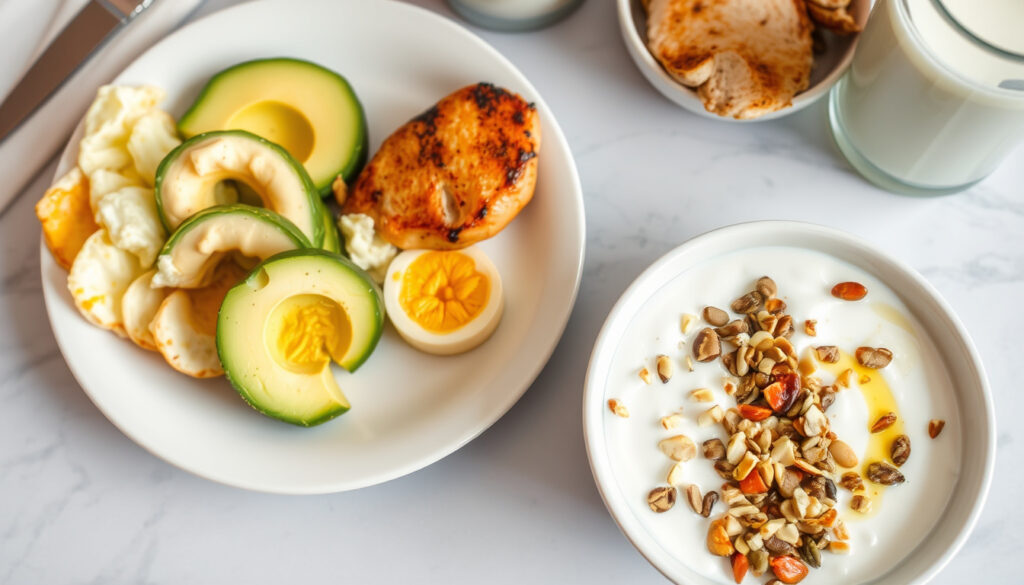
High Protein Breakfast Ideas for 30g and 40g Targets
You’ve heard that breakfast is the most important meal of the day, but what if your morning meal falls short on protein? High-protein breakfast ideas can help you stay full and energized, whether you’re aiming for 30 grams or 40 grams.
Protein in one large egg: 6g ·
Recommended protein per meal for muscle maintenance: 20-40g ·
Daily protein requirement (average adult): 46-56g
Quick snapshot
- Two large eggs provide ~12g protein (NDTV Food (Indian food publication))
- Greek yogurt is a high-protein breakfast staple (~23g per cup) (Vegan First (plant-based nutrition site))
- Whether 30g protein at breakfast is optimal for all individuals — depends on body weight and activity level (Buttered Veg (vegetarian recipe blog))
- The exact effectiveness of the 30-30-30 rule for weight loss without additional lifestyle changes (Buttered Veg (vegetarian recipe blog))
- The 30-30-30 rule recommends 30g protein within 30 minutes of waking, followed by 30 minutes of exercise — a trend gaining traction for weight management (Buttered Veg (vegetarian recipe blog))
- More research is needed on best protein timing for muscle synthesis and satiety across different populations (NDTV Food (Indian food publication))
Five key facts about protein in common breakfast foods — a quick reference for planning your morning meal.
| Food | Protein per serving |
|---|---|
| Protein needed for breakfast (general recommendation) | 20-30g |
| 2 large eggs | 12g |
| 1 cup Greek yogurt (plain, nonfat) | 23g |
| 1 scoop whey protein powder | 25g |
| 1 cup cooked lentils | 18g |
What is a really good high-protein breakfast?
A truly good high-protein breakfast delivers at least 20-30g of protein while balancing fiber, healthy fats, and carbohydrates. According to NDTV Food, a moong dal chilla stuffed with paneer provides about 20-25g of protein — enough to keep you satisfied through the morning. The best options combine multiple protein sources, like eggs with cheese or yogurt with nuts, to reach the target without excessive portion sizes.
Defining a ‘good’ high-protein breakfast
- Provides 20-30g protein from whole foods
- Includes fiber-rich vegetables or fruits
- Contains healthy fats for satiety (nuts, seeds, avocado)
Macronutrient balance beyond protein
A high-protein breakfast should not ignore carbs and fats. For instance, a ragi dosa with paneer bhurji offers 22-25g protein plus slow-release carbohydrates from ragi, as reported by NDTV Food. The fiber in ragi and the calcium in paneer round out the meal nutritionally.
Sample high-protein breakfast combos
- Greek yogurt parfait with berries, chia seeds, and almonds
- Egg and cheese muffin cups with spinach and mushrooms
- Protein smoothie with banana, peanut butter, and milk
The implication: a single dish can meet your morning protein target if it combines legumes, dairy, or grains strategically.
How can I get 30g of protein first thing in the morning?
Reaching 30g of protein at breakfast is achievable with a little planning. Start with a base of eggs or yogurt and add complementary foods. A combination of 3 eggs (18g) plus a glass of milk (8g) already gets you to 26g — toss in a handful of almonds (3g) and you’re over 30g.
Quick 30g protein breakfast ideas
- 2 moong dal chillas (each ~20-25g) plus a side of curd (4g) — from NDTV Food
- 1 cup Greek yogurt (23g) + 2 tbsp hemp seeds (7g)
- Protein shake with milk (30g total from powder + milk) — easily customizable
Combining multiple protein sources
The trick is pairing complementary proteins. For example, besan chilla (22g protein per 100g besan, per Vegan First) with a spoonful of peanut butter (4g) pushes a two-chilla serving over 30g.
Protein powder as a supplement
Whey or plant-based protein powder can fill gaps. A single scoop (25g) stirred into oatmeal or blended into a smoothie adds a concentrated protein boost without much volume.
The pattern: layering two or three protein sources makes the 30g goal straightforward without oversized portions.
How can I get 40g of protein for breakfast?
For athletes or very active individuals, 40g may be the goal. This requires larger portions or higher-density foods. A tofu scramble with edamame and nutritional yeast can yield 35-40g. Or combine 4 eggs (24g) with 1 cup Greek yogurt (23g) for a total of 47g.
40g breakfast for athletes and active individuals
- 4 eggs scrambled with cheese (24g + 6g) + 1 cup Greek yogurt (23g) = 53g
- Paneer paratha (2 pieces, ~20g each from NDTV Food) + a glass of milk (8g) + almonds (3g) = ~51g
- Quinoa upma with paneer cubes (18g from NDTV Food) + a side of masala chai with milk (2g) — needs a boost
Using lean meats and dairy
Non-vegetarian options like chicken sausage (12g per link) or turkey bacon (4g per slice) can add variety. Pair with eggs and cheese for a dense protein load.
Plant-based 40g options
Tofu scramble with edamame (35-40g) is a vegan powerhouse. Add a scoop of pea protein powder to a smoothie (25g) plus 2 tbsp chia seeds (5g) and soy milk (7g) to reach 37g.
What this means: a 40g target is within range for anyone willing to combine two substantial protein sources in one meal.
What high-protein foods are good for breakfast?
The best high-protein breakfast foods are those you can combine easily. Animal sources like eggs, Greek yogurt, and cottage cheese are classic. Plant sources like tofu, tempeh, lentils, and besan shine in vegetarian dishes. Seeds (hemp, chia, pumpkin) and whole grains (quinoa, ragi) also contribute.
Animal-based protein sources
- Eggs: 6g per large egg
- Greek yogurt: 23g per cup
- Cottage cheese: 12g per 1/2 cup
- Chicken or turkey sausage: 8-12g per link
Plant-based protein sources
- Tofu: 10g per 100g
- Tempeh: 19g per 100g
- Lentils: 18g per cup cooked
- Besan (gram flour): 22g per 100g — per Vegan First
Protein-rich grains and seeds
- Quinoa: 8g per cup cooked
- Ragi (finger millet): 7g per 100g
- Hemp seeds: 10g per 2 tbsp
- Chia seeds: 5g per 2 tbsp
Plant-based eaters often struggle to hit protein targets, but Indian breakfasts like besan chilla, thalipeeth, or mattar paratha (all listed by Vegan First) show that traditional foods already contain substantial protein.
The catch: you don’t need exotic ingredients — many pantry staples already pack significant protein.
Are 2 eggs enough protein for breakfast?
Two large eggs provide about 12g protein — enough for a light start but below the 20-30g target most adults need for satiety and muscle maintenance, according to general dietary guidelines. For those who eat eggs, boosting with cheese, milk, or a side of yogurt can close the gap.
Protein content of two eggs
At 6g per large egg, two eggs give 12g. That’s about half of what’s recommended for a high-protein breakfast. However, many Indian breakfasts that don’t contain eggs still achieve 20-25g per serving, as NDTV Food demonstrates with moong dal chilla.
Who might need more than two eggs
Athletes, older adults, and people trying to lose weight often need more. Two eggs alone may not trigger sufficient muscle protein synthesis or keep hunger at bay until lunch.
How to boost egg-based breakfasts
- Add shredded cheese (6g per ounce)
- Serve with a side of cottage cheese (12g per 1/2 cup)
- Pair with a cup of Greek yogurt (23g)
The implication: a simple egg breakfast can be upgraded to a protein powerhouse with minimal additions.
How to build a high-protein breakfast (step by step)
Follow these four steps to create a protein-packed breakfast that meets your goals.
- Choose a protein base — pick 1-2 sources: eggs, Greek yogurt, cottage cheese, tofu, or besan (gram flour).
- Add a complementary protein — combine plant with animal or use a variety of plants (e.g., lentils + nuts).
- Include fiber and healthy fats — vegetables, fruits, nuts, seeds, avocado to round out the meal.
- Adjust portions to hit your target — use the numbers above to calculate: 30g or 40g.
Example: A tofu scramble (10g) with 1/4 cup edamame (8g) and 2 tbsp hemp seeds (10g) = 28g. Add a glass of soy milk (7g) to reach 35g.
Clarity check: What we know vs. what’s still uncertain
Confirmed facts
- Moong dal chilla with paneer provides 20-25g protein (NDTV Food)
- Ragi dosa with paneer bhurji provides 22-25g protein (NDTV Food)
- Besan (gram flour) contains 22g protein per 100g (Vegan First)
- Greek yogurt (plain, nonfat) contains 23g protein per cup (Vegan First)
What’s unclear
- Whether 30g at breakfast is optimal for all individuals — depends on body weight and activity level
- The exact weight loss effects of the 30-30-30 rule without other lifestyle changes
- How much protein timing (within 30 min of waking) affects long-term muscle gains
Expert perspectives on high-protein breakfasts
More related posts
Where Can I Watch Yellowstone? Netflix, Prime, Paramount+ Guide
Travis Hunter Deion Sanders Texas Reunion June 2025
Cedar Lakes Woods and Gardens: Hours, Admission, Tours & More
January 1 California Pet Law: 2026 Changes Explained
Palantir Stock Price Today – Live Quotes, Charts and Analysis
How to Win Friends and Influence People: Key Insights
When Was Electricity Invented? A Timeline of Key Milestones
World Market Near Me: Locations, Hours & Online Guide