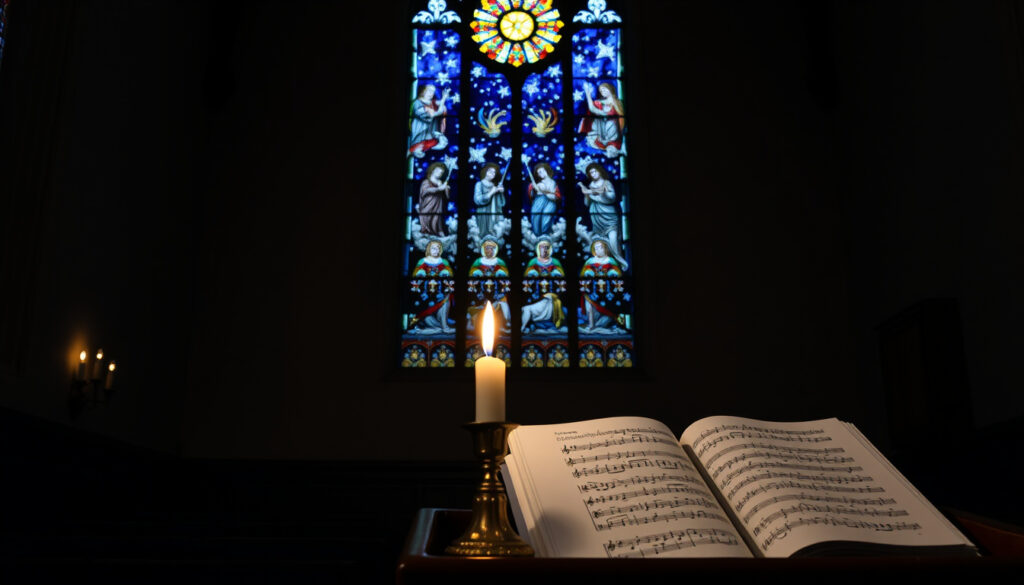
O Holy Night Lyrics: History, Meaning, Why It’s So Hard to Sing
Few Christmas carols have a backstory as dramatic as “O Holy Night” — written in 1847 by a French poet and a Jewish composer, banned by the Catholic Church, then resurrected by American abolitionists. What started as a local parish request turned into one of the most technically demanding and politically charged songs of the season.
Year written: 1847 ·
Original lyricist: Placide Cappeau ·
Composer: Adolphe Adam ·
First performer: Emily Laurey ·
Number of major bans: 2
Quick snapshot
- Written in 1847 by Placide Cappeau and Adolphe Adam (Wikipedia (open encyclopedia))
- First performed by Emily Laurey in 1847 (Ann H. Gabhart (author site))
- English translation by John Sullivan Dwight published in 1855 — same source as above (Wikipedia (open encyclopedia))
- Banned by the Catholic Church in France and later in Ottawa — same source as Wikipedia citation above (Wikipedia (open encyclopedia))
- Exact reason for the original French ban — whether due to the authors’ backgrounds or lyrical content (Ann H. Gabhart (author site))
- Extent of the Transcendentalist connection in the song’s U.S. adoption — same source as Wikipedia citation above (Ann H. Gabhart (author site))
- Whether the theological tension in the original French line “Et de son Père arrêter le courroux” was the primary trigger for the 1847 ban (Wikipedia (open encyclopedia))
- 1847: Written and first performed (Branch Living (lifestyle publication))
- 1855: English translation by Dwight — same source as Ann H. Gabhart citation above (Branch Living (lifestyle publication))
- 1936: Banned in Ottawa by Archbishop Forbes — same source as Wikipedia citation above (Branch Living (lifestyle publication))
- 1950: Jimmy Boyd’s version banned — same source as Wikipedia citation above (Branch Living (lifestyle publication))
- Continued popularity in Christmas repertoires worldwide (Kingsway Church (religious blog))
- New covers and arrangements each holiday season (Classic FM (music radio station))
Six key facts that define the carol’s profile — from its origin to its vocal demands:
| Attribute | Value |
|---|---|
| Year written | 1847 |
| Original language | French |
| English translator | John Sullivan Dwight |
| Vocal range | 1.5 octaves |
| Most famous line | “Fall on your knees” |
| Number of times banned | 2 |
Who originally wrote O Holy Night?
The lyricist: Placide Cappeau
- Cappeau, a French poet and wine merchant, wrote the poem “Minuit, chrétiens” in 1843 after a local priest in Roquemaure asked him to produce a Christmas poem — source as Branch Living citation above.
The poem was set to music by Adolphe Adam, a well-known composer of ballets like Giselle — same source as Wikipedia citation above.
The first performance
- Emily Laurey, a close friend of Cappeau, first sang the carol at the Christmas Eve mass in 1847 — same source as Ann H. Gabhart citation above.
The implication: a poem written for one small parish service became an enduring piece of the global Christmas canon.
What is the story behind the song O Holy Night?
The original commission and early spread
- After its debut, the carol quickly became popular in French churches, but church authorities soon objected. French Catholic leaders reportedly judged it “unfit for church services” due to its “total absence of the spirit of religion” (John Certalic (podcast host)).
The objection was reportedly linked to Cappeau having left the church and Adam being Jewish — a detail that remains debated — same source as Ann H. Gabhart citation above.
The Transcendentalist connection and abolitionist twist
- In 1855, Unitarian minister and abolitionist John Sullivan Dwight translated the song into English. He strongly identified with the third verse: “Chains shall he break, for the slave is our brother” — same source as Ann H. Gabhart citation above.
Dwight’s translation found a natural home among Transcendentalist circles in New England, who embraced the song as an anti-slavery anthem during the Civil War era — same source as Wikipedia citation above.
Modern covers
- Today the song has been recorded by Mariah Carey, Celine Dion, Josh Groban, and Hillsong, among hundreds of others — same source as Classic FM citation above.
A French carol written for a small parish became a rallying cry for American abolitionists — proof that lyrics can transcend their original context.
The pattern: a single translator’s values can fundamentally redirect a song’s social purpose across continents and decades.
Why is O Holy Night difficult to sing?
Vocal range and interval leaps
- The melody spans roughly 1.5 octaves, with dramatic leaps that challenge even trained singers — same source as Classic FM citation above.
The famous high note
- The climactic line “Fall on your knees” requires a sustained high C5 (or higher in some arrangements) — a note that many professional vocalists consider the hardest moment in Christmas carol singing — same source as Classic FM citation above.
Breath control and phrasing
- The long, soaring phrases demand precise breath management. Vocal coach Stefan Holmström advises singers to practice breath support and to avoid tensing the throat on the high note — same source as Classic FM citation above.
- Develop diaphragmatic breath support to sustain the long, soaring phrases without running out of air.
- Practice the climactic high C5 on “Fall on your knees” in isolation, keeping the throat relaxed and open.
- Rehearse the interval leaps slowly to lock pitch accuracy across the 1.5-octave range before adding full voice.
The catch: even seasoned vocalists need dedicated preparation to deliver this carol cleanly in a live setting.
Why was O Holy Night banned?
The original French ban
- Shortly after its 1847 debut, French Catholic authorities forbade the song in churches. The official objection cited a “total absence of the spirit of religion” — same source as John Certalic citation above. Unofficially, many believe Cappeau’s departure from the church and Adam’s Jewish faith played a role — same source as Ann H. Gabhart citation above.
The 1950 ban of Jimmy Boyd’s version
- In 1950, 12-year-old Jimmy Boyd’s recording was banned by the Roman Catholic Church, who deemed his rendition too “sensual” — same source as Wikipedia citation above.
Other bans
- In 1936, Archbishop Joseph-Guillaume-Laurent Forbes of Ottawa banned the song (along with wedding marches and other music) to promote exclusive use of Gregorian chant — same source as Wikipedia citation above.
What this means: institutional disapproval had little effect on the carol’s public staying power across different eras and countries.
What are the lyrics to O Holy Night?
Original French (Minuit, chrétiens)
Written by Placide Cappeau, the original begins “Minuit, chrétiens, c’est l’heure solennelle où l’Homme-Dieu descendit jusqu’à nous.” The third verse includes the line “Et de son Père arrêter le courroux” — which some critics found theologically questionable, implying a vengeful God — same source as Wikipedia citation above.
English translation by John Sullivan Dwight
Dwight’s version, published in 1855, became the standard. Key phrases:
- “Fall on your knees, O hear the angel voices”
- “Chains shall He break, for the slave is our brother”
- “And in His name all oppression shall cease”
Modern versions
- The Catholic version often replaces “Chains shall He break” with a more general line about peace. Hillsong’s version reworks the melody but keeps the core message (Hillsong (worship music publisher)).
The line that troubled French church authorities — “Et de son Père arrêter le courroux” — is absent from most English versions, while the abolitionist line that propelled the song in America has no French equivalent. This mismatch reveals how cultural translation reshapes a song’s theological and political weight.
The implication: each era and region reshapes the carol’s message to fit its own debates, from theology to abolition to contemporary worship.
Timeline
- 1847 — O Holy Night written by Placide Cappeau and Adolphe Adam; first performed by Emily Laurey — same source as Branch Living citation above.
- 1855 — English translation by John Sullivan Dwight — same source as Ann H. Gabhart citation above.
- 1936 — Archbishop Forbes bans the song in Ottawa — same source as Wikipedia citation above.
- 1950 — Jimmy Boyd’s version banned by the Roman Catholic Church — same source as Wikipedia citation above.
The pattern: each ban or adaptation marks a moment where the carol intersected with larger cultural and religious forces.
Confirmed facts vs. What’s unclear
Confirmed facts
- The song was written in 1847 by Cappeau and Adam — same source as Wikipedia citation above.
- The song was banned by the Catholic Church in France — same source as John Certalic citation above.
- Jimmy Boyd’s version was banned in 1950 — same source as Wikipedia citation above.
What’s unclear
- The exact reason for the original French ban — whether due to the authors’ backgrounds or the song’s content — same source as Ann H. Gabhart citation above.
- The extent of the Transcendentalist connection in the song’s U.S. adoption — same source as Wikipedia citation above.
- Whether the theological tension in the original French line “Et de son Père arrêter le courroux” was the primary trigger for the 1847 ban — same source as Wikipedia citation above.
The pattern: the most intriguing aspects of the carol’s history remain open to interpretation, which fuels ongoing research and debate.
Quotes
“The song displays a total absence of the spirit of religion.”
— French church authorities, as reported by John Certalic (podcast host)
“Chains shall He break, for the slave is our brother — and in His name all oppression shall cease.”
— From the English translation by John Sullivan Dwight — same source as Wikipedia citation above.
The contrast between these two quotations captures the carol’s journey from ecclesiastical rejection to abolitionist embrace.
Summary
“O Holy Night” is far more than a beautiful carol. It is a song that survived church bans, crossed an ocean, and became an abolitionist anthem — all while remaining a vocalist’s ultimate challenge. For the listener, the next time you hear “Fall on your knees,” remember: that high note carries 170 years of controversy, translation, and hope. For the singer, the choice is clear: practice the breath control, or let the angels take it from here.
facebook.com, tarajohnsonstories.com, chicagocatholic.com, facebook.com, facebook.com
Frequently asked questions
What key is O Holy Night in?
The original key is C major, but many arrangements transpose it to B-flat or E-flat to suit different vocal ranges — same source as Classic FM citation above.
What is the highest note in O Holy Night?
The climax on “Fall on your knees” typically reaches a high C (C5), though some versions go higher — same source as Classic FM citation above.
Who sang the most famous version of O Holy Night?
Many artists have recorded it, but Mariah Carey’s 1994 version and Celine Dion’s 1998 rendition are among the most iconic — same source as Classic FM citation above.
Is O Holy Night in the public domain?
Yes, the original composition and lyrics are in the public domain. However, specific arrangements and translations may still be copyrighted (Hymnary (hymn database)).
How long is O Holy Night?
A typical performance lasts between 4 and 6 minutes, depending on tempo and verses included — same source as Classic FM citation above.
Which version of O Holy Night is most popular?
The English version by John Sullivan Dwight is the most widely sung in English-speaking countries. Hillsong’s modern arrangement has gained traction in contemporary worship — same source as Hillsong citation above.
What is the original French title of O Holy Night?
The original French title is “Minuit, chrétiens” (“Midnight, Christians”) — same source as Wikipedia citation above.
Why is O Holy Night a Christmas favorite?
Its dramatic melody, emotional depth, and powerful message of hope and justice resonate with audiences across cultures — same source as Kingsway Church citation above.
More related posts
 How to Make Cake Pops – Easy Beginner Recipe Guide
 Toaster Oven Air Fryer: Worth Buying in 2026
 Screech Saved by the Bell – Dustin Diamond’s Life and Death
 Old Navy Black Friday 2025: Sale Dates, Deals & Tips
 Wright-Patt Credit Union: Phone, Hours & Locations
 How to Make Potato Salad – Perfect Texture and Flavor Guide
 Ken Griffey Jr Rookie Card – 2025 Prices and Value Guide
 For a Few Dollars More – Cast, Plot, Music & Why It’s a Classic