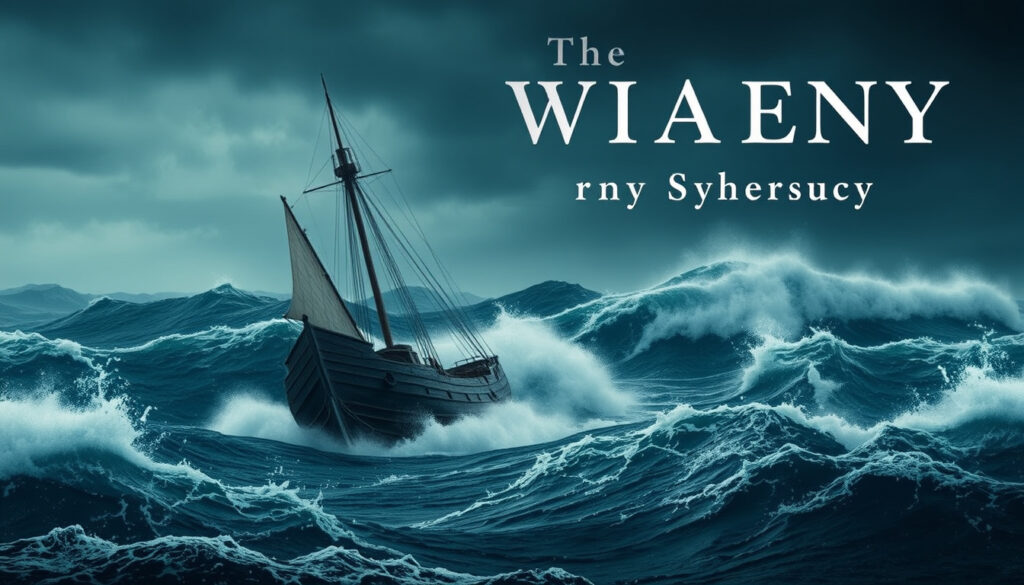
In the Heart of the Sea: True Story, Box Office Flop & Cast Facts
A shipwreck that inspired a classic novel, a film that couldn’t catch a wave at the box office — the story of the whaleship Essex is as gripping as it is grim. Ron Howard’s 2015 maritime drama “In the Heart of the Sea” brought that true story to the screen with a $100 million budget and a cast that included Chris Hemsworth and Cillian Murphy.
Release Year: 2015 ·
Director: Ron Howard ·
Budget: $100 million ·
Worldwide Box Office: $94 million ·
Rotten Tomatoes Score: 42%
Quick snapshot
- Whale attack in 1820 (National Endowment for the Arts (U.S. government agency))
- Three months adrift (National Endowment for the Arts (U.S. government agency))
- Cannibalism among survivors (National Endowment for the Arts (U.S. government agency))
- Directed by Ron Howard (Wikipedia (online encyclopedia))
- Starring Hemsworth, Murphy, Walker (Fandango (ticketing platform))
- Released December 11, 2015 (IMDb (movie database))
- $100M budget, $94M gross (IMDb (movie database))
- 42% on Rotten Tomatoes (Rotten Tomatoes (review aggregator))
- Labeled a commercial flop (BBC News (British broadcaster))
- Chris Hemsworth as Owen Chase (Fandango (ticketing platform))
- Cillian Murphy as Matthew Joy (Fandango (ticketing platform))
- Benjamin Walker as George Pollard (Fandango (ticketing platform))
Eight facts, one pattern: every key attribute of the film reveals a split between ambition and outcome.
| Attribute | Value |
|---|---|
| Directed by | Ron Howard (Wikipedia (online encyclopedia)) |
| Starring | Chris Hemsworth, Cillian Murphy, Benjamin Walker, Tom Holland (Fandango (ticketing platform)) |
| Based on | In the Heart of the Sea: The Tragedy of the Whaleship Essex by Nathaniel Philbrick (National Endowment for the Arts (U.S. government agency)) |
| Release Date | December 11, 2015 (United States) (IMDb (movie database)) |
| Runtime | 122 minutes (IMDb (movie database)) |
| Budget | $100 million (IMDb (movie database)) |
| Box Office | $94 million worldwide (The Numbers (box office tracker)) |
| Rotten Tomatoes | 42% (critics), 51% (audience) (Rotten Tomatoes (review aggregator)) |
The pattern: a film with lofty intentions that never quite reached its target audience.
A film that re‑creates one of history’s most harrowing survival stories with stunning visual effects and earnest performances — and still loses money. The same blend of authenticity and grimness that earns praise from historians likely turned away mainstream audiences.
What is the true story behind In the Heart of the Sea?
The sinking of the whaleship Essex in 1820
On November 20, 1820, the Nantucket whaleship Essex was rammed by a sperm whale in the Pacific Ocean. The collision sank the ship in minutes, leaving 20 crew members adrift in three small whaleboats (National Endowment for the Arts (U.S. government agency)).
Survival at sea: cannibalism and the ordeal
The men spent over 90 days at sea, enduring starvation, dehydration, and exposure. According to historical accounts, the survivors eventually resorted to cannibalism — drawing lots to determine who would be sacrificed so others could live (National Endowment for the Arts (U.S. government agency)).
Connection to Herman Melville’s Moby‑Dick
First mate Owen Chase wrote a firsthand account of the disaster, “Narrative of the Most Extraordinary and Distressing Shipwreck of the Whale‑Ship Essex” (1821). Herman Melville read it years later and used the whale attack as the climax of his 1851 novel Moby‑Dick (National Endowment for the Arts (U.S. government agency)).
Why was In the Heart of the Sea a flop?
Box office performance and budget
The film had an estimated production budget of $100 million (IMDb (movie database)). Its worldwide gross ended at $94,320,758, with just $25 million coming from North America (The Numbers (box office tracker)). The opening weekend in the U.S. and Canada was $11,053,366, which represented 44.2% of its entire domestic run (The Numbers (box office tracker)).
Competition from other 2015 releases
“In the Heart of the Sea” opened on December 11, 2015 — one week before “Star Wars: The Force Awakens,” which shattered box‑office records. BBC News noted that the film “grossed just $11 million in its opening weekend across more than 3,000 cinemas in the US” and described it as a box‑office flop (BBC News (British broadcaster)).
More related posts
 What Does Gyatt Mean? Definition, Origin, and Usage
 Jiu Jitsu Near Me: Best BJJ Gyms in Dublin (2025 Guide)
 Palantir Stock Price Today – Live Quotes, Charts and Analysis
 Zach Bryan Tour 2026: UK & Ireland Dates, Tickets
 Vital Proteins Collagen Peptides: Do They Really Work
 For a Few Dollars More – Cast, Plot, Music & Why It’s a Classic
 Shut the Box Game: Rules, Strategy, and Age Guide (2025)
 Honda HR-V guide: prices, problems, best years & 2026 trims