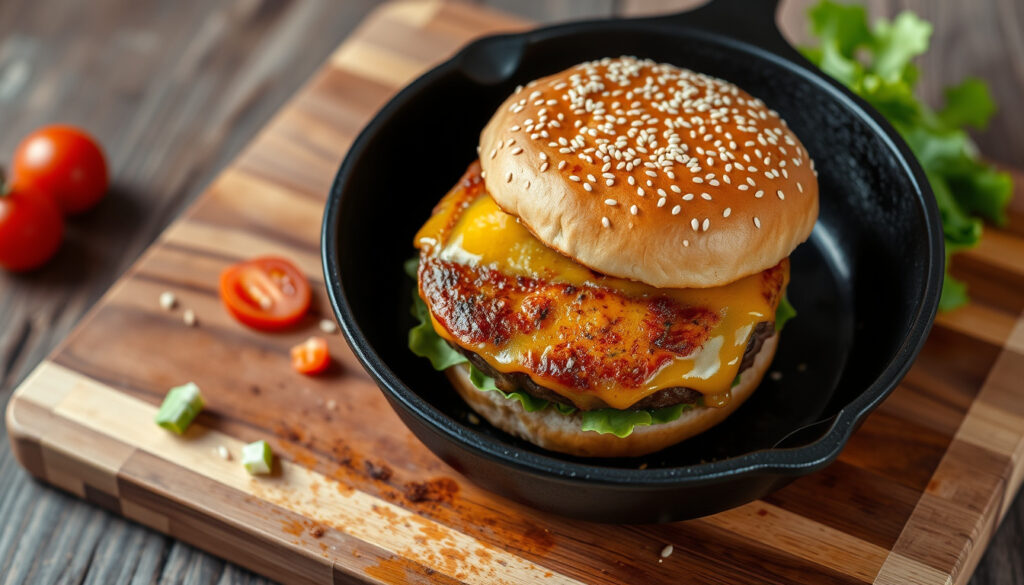
How to Make Smash Burgers: Perfect Crispy Crust
Few things hit the table with the same crunch as a properly made smash burger. That lacy, browned crust is the reward for good technique — and a solid dose of food science. In the next few minutes, you’ll learn exactly how to get that result every time, from the right beef blend to the precise moment you press down.
Best beef fat ratio: 80/20 ground chuck · Average patty weight: 2–3 oz (56–85 g) · Ideal cooking temperature: 375–400 °F (190–204 °C) · Typical cooking time per patty: 3–4 minutes · Most common cooking surface: Cast iron griddle or flat-top
Quick snapshot
- High heat (375–400°F) and immediate smashing create crust (Your Homebased Mom)
- 80/20 beef provides optimal fat for crispy edges (Natasha’s Kitchen)
- Cook first side 2 minutes, second side 1 minute (Natasha’s Kitchen) (Your Homebased Mom)
- Smash thickness: 1/4 inch (Baking Steel)
- Whether seasoning before or after smashing affects texture (chefs differ)
- Optimal patty weight for home cooks (2 oz vs 4 oz)
- Effect of butter vs oil on crust formation
- Whether cast iron is necessary for best sear (some chefs prefer carbon steel)
- First side: 2 minutes at high heat (Natasha’s Kitchen)
- Second side: 1 minute for medium doneness (Natasha’s Kitchen) (Natasha’s Kitchen)
- Add cheese during last 30 seconds (Baking Steel)
- Serve immediately on toasted buns
- Double stack for thicker burger
- Leftovers: reheat in skillet
Six factors determine a great smash burger — and each has a precise target.
| Factor | Value |
|---|---|
| Beef fat ratio | 80/20 (chuck or blend) |
| Patty weight | 2–4 oz (typically quarter-pound) |
| Cooking temperature | 375–400 °F (190–204 °C) |
| Smash thickness | 1/4 inch (6 mm) |
| Total cooking time | 3–5 minutes |
| Essential tool | Flat metal spatula or burger press |
What is the trick to making smash burgers?
Use high heat and a heavy press
The most important variable is temperature. The cooking surface needs to be between 375 and 400 °F — hot enough to trigger the Maillard reaction instantly when the beef makes contact. A heavy metal spatula or a dedicated burger press ensures the patty flattens to about ¼ inch within seconds of hitting the griddle. Smash once, hard, and do not press again during cooking.
Choose 80/20 ground beef for flavor and crust
Fat is essential for the crispy crust. Ground beef with 20 percent fat (80/20) renders enough liquid to create a sizzling sear without drying out the interior. Leaner blends (90/10) produce a drier patty and significantly less browning, as noted by Natasha’s Kitchen.
Smash immediately after placing the ball on the griddle
Timing is everything. If you wait even a few seconds, the bottom of the ball starts cooking and the interior loses its ability to spread thin. Use a piece of parchment paper between the spatula and the meat to prevent sticking, then press firmly and quickly.
The window for smashing closes fast — about 3 seconds after the ball hits the surface. Delay, and you get a thick patty with less crust.
The pattern: High heat + immediate, single press + fatty beef = the crust that defines the style. No other burger technique delivers so much texture in so little time.
How to make your own smash burgers?
Form loose meatballs
Divide 1 lb of 80/20 ground beef into 4 equal portions of 4 oz each, or follow The Pioneer Woman who uses 2 oz balls for smaller patties. Roll each portion into a loose ball — do not compress the meat. Overhandling makes the patty dense and tough.
Preheat the cooking surface
Set a cast iron griddle or heavy skillet over high heat for 5 minutes. A drop of water should sizzle and evaporate instantly. Lightly oil the surface with a neutral oil such as canola or clarified butter, as recommended by Hey Grill Hey.
Smash and cook for 2–3 minutes per side
Place the meatballs on the hot surface and smash immediately to ¼-inch thickness using a spatula and parchment paper. Cook the first side for 2 minutes until the edges are lacy and browned. Flip by scraping the spatula under the patty to preserve the crust. Cook the second side for 1 minute for medium doneness.
Add cheese during the last minute
Lay a slice of American or cheddar cheese on each patty after flipping, and cover the griddle with a metal bowl or lid to melt. Baking Steel notes this keeps the cheese gooey without overcooking the meat.
Each minute of cooking time is tightly linked to doneness. The 2–1 split (first side longer, second side shorter) produces a medium patty with a strong crust and a juicy center.
The implication: The formula is simple — loose balls, hot surface, one hard press, and a timer. Deviate on any variable and the crust‑to‑juiciness ratio shifts.
What do I need for making smash burgers?
Essential tools: griddle, spatula, press
A flat cooking surface is non‑negotiable. A cast iron griddle (or a large carbon‑steel pan) holds heat evenly and gives the patty maximum contact area. You also need a thin, stiff metal spatula — the kind used at diner counters — plus something heavy to press: a second spatula, a brick wrapped in foil, or a dedicated burger press.
Key ingredients: ground beef, buns, cheese, toppings
Start with 80/20 ground chuck (or a blend of chuck and brisket). Soft potato rolls or brioche buns are standard; they toast quickly and don’t overpower the meat. American cheese melts fastest, but sharp cheddar and provolone also work. Classic toppings include shredded lettuce, sliced tomato, thin‑cut onion, and pickles.
Optional extras: burger sauce, seasoning
Many recipes season the meat with salt, pepper, garlic powder, and onion powder after smashing. Once Upon a Chef adds Worcestershire sauce to the meat before forming balls. For the sauce, combine mayo, ketchup, yellow mustard, and chopped pickles — a ratio of 2:1:1:1 works well.
The trade‑off: More toppings add moisture that can soften the crust. Serve the patties directly on the bun and add wet ingredients only at the last minute.
What are common smash burger mistakes?
Using lean beef
Ground beef with less than 15–20 percent fat dries out during the high‑heat cook and fails to form a proper crust. Your Homebased Mom warns that lean meat produces a gray, tough patty rather than a seared one.
Pressing too hard or too early
If you press the patty a second time after the first smash, you squeeze out the rendered fat and juice. The result is a dry, dense burger. Press once, firmly, and leave it alone.
Overcooking or undercooking
Because the patty is thin, it cooks fast. Three minutes total is usually enough for medium. Overcooking turns the edges brittle; undercooking leaves the center raw. Use a timer and check the crust color rather than relying on temperature.
Crowding the cooking surface
Too many patties on the griddle at once lower the surface temperature. Each patty needs room for the heat to stay high and consistent. Cook in batches of 2–3 patties depending on your pan size.
The catch: Every mistake comes back to heat management or moisture loss. Keep the griddle hot, the meat fatty, and your hands off the patty after the first press.
How does Gordon Ramsay make smash burgers?
Use a cast iron pan and high heat
Ramsay’s method starts with a cast iron skillet heated until it’s smoking. He adds a small knob of butter to the pan before placing the beef, which helps the crust develop faster and adds a nutty flavor.
Smash and season with salt and pepper only
He forms 4 oz balls, drops them into the butter‑coated pan, and smashes them flat with a metal spatula. Immediately after smashing, he seasons the patty with salt and pepper — no other spices. He flips once after 2 minutes, tops with cheddar, and serves on a toasted brioche bun with lettuce and tomato.
The pattern: Ramsay’s approach strips away complexity. Butter instead of oil, salt‑and‑pepper only, and a single flip. It’s a masterclass in trusting the heat and the fat.
Step-by-Step Smash Burger Process
- Portion the beef: Divide 1 lb of 80/20 ground chuck into 4 loose balls of 4 oz each. For smaller patties, use 2 oz balls (makes 8).
- Preheat the griddle: Heat a cast iron griddle or large skillet over high heat for 5 minutes until it reaches 375–400 °F. Add a thin layer of oil or clarified butter.
- Smash immediately: Place the meatballs on the hot surface. Cover each with a square of parchment paper and press firmly with a heavy spatula until ¼ inch thick. Remove parchment.
- Cook the first side: Cook for 2 minutes without moving. The edges will turn deep brown and lacy. Scrape the spatula under the patty to free the crust, then flip.
- Cook the second side: Cook for 1 minute. Add a slice of American cheese during the last 30 seconds. Cover with a lid or dome to melt.
- Toast the buns: While the patties cook, split the buns and toast them cut‑side down on the griddle for 30 seconds.
- Assemble: Place the cheese‑topped patty on the bottom bun. Add lettuce, tomato, onion, pickles, and smash burger sauce. Top with the other bun and serve immediately.
What’s Confirmed and What’s Not
Confirmed facts
- High heat (375–400°F) and immediate smashing are critical for crust.
- 80/20 beef provides optimal moisture and flavor.
- Cooking time of 3–4 minutes per side yields medium doneness.
What remains unclear
- Whether seasoning before or after smashing affects texture significantly (some chefs differ).
- Optimal patty weight for home cooks (2 oz vs 4 oz common).
- Effect of adding butter versus oil on crust formation.
- Whether cast iron is necessary for best sear (some chefs prefer carbon steel).
“Smash the burger as soon as it hits the pan and season only after smashing to keep the meat tender.”
— Gordon Ramsay (via interview, technique described by Once Upon a Chef)
“The high surface area created by smashing maximizes the Maillard reaction, leading to a brown crust and intense beef flavor.”
— J. Kenji López‑Alt, culinary scientist (Serious Eats)
For home cooks looking for a reliably crispy smash burger, the evidence points overwhelmingly toward high heat, 80/20 beef, and a single decisive press. The unclear points — seasoning timing and patty size — are worth experimenting with once you’ve nailed the basic technique. The pattern is clear: trust the heat, use enough fat, and keep your hands off the patty after the smash.
For those new to the method, understanding the smash burger technique can help you achieve that perfect crispy crust.
Frequently Asked Questions
What type of ground beef is best for smash burgers?
80/20 ground chuck (or a blend of chuck and brisket) provides the ideal fat content. The 20 percent fat renders during cooking, creating the crispy crust while keeping the interior moist. Leaner cuts dry out and fail to brown.
Can I make smash burgers without a press?
Yes. Use a heavy metal spatula and press down with one hand while placing the other hand on top for leverage. A second spatula or a flat-bottomed mug can also work. Parchment paper prevents sticking.
How do I keep smash burgers from shrinking?
Don’t overwork the meat when forming the balls. Loose, lightly packed portions shrink less. Also, avoid pressing the patty again after the initial smash — repeated pressing squeezes out fat and causes more shrinkage.
What is the best cheese for smash burgers?
American cheese melts quickly and evenly, making it the classic choice. Sharp cheddar, provolone, and Monterey Jack also work well. Avoid hard cheeses like Parmesan that don’t melt smoothly.
Can I cook smash burgers on a gas grill?
Yes, if you have a flat griddle plate for the grill. Directly on the grates, the patty will fall through or cook unevenly. A cast iron griddle placed over the burners works perfectly.
How to make smash burger sauce?
Combine 2 tbsp mayonnaise, 1 tbsp ketchup, 1 tbsp yellow mustard, and 1 tbsp finely chopped pickles. Add a pinch of paprika and garlic powder. Adjust ratios to taste.
Are smash burgers healthier than regular burgers?
Smash burgers are not inherently healthier. The thin patty cooks quickly and may absorb less oil, but the high heat can produce acrylamide in the crust. Portion control is easier because each patty is small, but overall calorie counts depend on toppings and bun size.
How to reheat leftover smash burgers?
Reheat in a dry skillet over medium heat for about 1 minute per side. The cast iron will restore some of the crust. Avoid microwaving, which makes the patty soggy.
Related reading: how to make potato salad · how to make cake pops
More related posts
 Tampa Bay Rays Score: Today, Yesterday & Live Results
 Irish Wish Cast: Full Actors List and Nationalities
 Great Wolf Lodge Locations: Complete Guide to 23 Resorts
 Is Avocado Oil a Seed Oil? Health Facts & Downsides
 For a Few Dollars More – Cast, Plot, Music & Why It’s a Classic
 The Diplomat Season 4: Netflix Release Date, Cast & News
 450+ This or That Questions: Fun, Flirty, Kids & More
 Last of Us Season 2: Release, Finale, and Season 3 Updates