Popped Blood Vessel in Eye: Causes, Healing, When to Worry
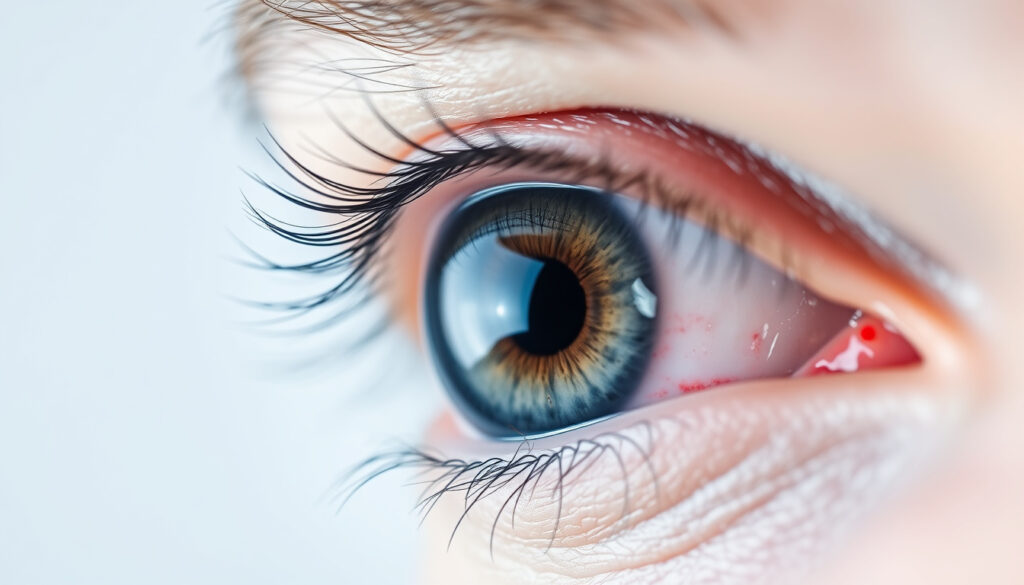
A bright red patch on the white of your eye looks alarming in the mirror, but here’s the reality: that spot is most likely a subconjunctival hemorrhage — a tiny surface blood vessel that has burst under the clear tissue covering your eye. While it looks serious, it’s typically painless, doesn’t affect vision, and resolves on its own within one to two weeks. The real skill is knowing when it’s harmless and when it signals something far more urgent.
Annual cases in the U.S.: estimated 1 in 50 adults ·
Typical healing time: 7 to 14 days ·
Emergency room visits required: less than 1% ·
Most common cause: minor trauma or vigorous coughing ·
Recurrence rate within one year: approximately 10%
Quick snapshot
- Subconjunctival hemorrhage is usually harmless and painless (BrightSight optometry practice)
- No treatment accelerates healing beyond the body’s own process (Baptist Eye ophthalmology practice)
- Direct role of psychological stress independent of physical strain is not well established (MyHealth Alberta government health service)
- Optimum follow-up frequency for recurrent hemorrhage is not standardized (BrightSight optometry practice)
- Bright red patch fades through yellow-green over 7–14 days (Acuvue contact lens manufacturer)
- Larger hemorrhages may take up to 3 weeks to clear (BrightSight optometry practice)
- If no pain or vision change, self-care at home is appropriate (Healthline health information publisher)
- Recurrent episodes warrant blood pressure screening (BrightSight optometry practice)
Six key facts, one pattern: most subconjunctival hemorrhages are benign and self-limiting, but specific features separate routine cases from those needing urgent care.
| Fact | Detail |
|---|---|
| Medical term | Subconjunctival hemorrhage |
| Appearance | Bright red patch on white of eye |
| Pain | Usually none |
| Vision impact | None |
| Typical duration | 7–14 days |
| ER needed | Rare (less than 1%) |
Should I be worried if I pop a blood vessel in my eye?
What does a subconjunctival hemorrhage look like?
- A bright red patch or speck on the white (sclera) of the eye, often with well-defined edges.
- The blood sits under the conjunctiva — the clear membrane covering the white — so the surface stays smooth.
- It may look alarming, especially if the spot is large, but there is typically no pain or discharge (MyHealth Alberta government health service).
When is a red spot on the eye not serious?
- No pain or tenderness.
- Vision remains clear and unchanged.
- The red patch appeared after sneezing, coughing, or straining.
- No recent head or eye trauma.
- The spot begins to change color toward yellow-green within a few days (Acuvue contact lens manufacturer).
A painless red spot with normal vision follows a predictable benign course. The patient who fits this profile can avoid an unnecessary ER visit and save time and worry by managing the condition at home.
Specific symptoms that mean you should seek emergency care
- Eye pain or a feeling of pressure inside the eye.
- Blurred, double, or lost vision in the affected eye.
- Headache, nausea, or photophobia (sensitivity to light).
- The red spot appeared after blunt trauma or head injury (Healthline health information publisher).
- Unexplained bleeding or bruising elsewhere on the body (Healthline health information publisher).
The implication: a bright red patch alone is not a reason to panic. The deciding factor is whether it comes with pain or vision change — those are the signals that elevate a benign hemorrhage to a potential emergency.
How do you heal a popped blood vessel in the eye?
Self-care steps: artificial tears, cool compress
- Use lubricating or artificial tears to soothe minor irritation while the hemorrhage heals (Healthline health information publisher).
- A cool compress applied gently over closed eyelids may reduce any mild discomfort.
- Avoid rubbing or putting pressure on the eye (Acuvue contact lens manufacturer).
- Sleeping with the head slightly elevated may help fluid drainage.
What not to do (avoid rubbing, aspirin without consultation)
- Do not rub or poke the eye — this can delay healing or cause re-bleeding.
- Do not take aspirin or ibuprofen for the appearance of the red spot unless prescribed by a doctor; these thin the blood and may prolong the hemorrhage.
- Do not use over-the-counter whitening eye drops — they treat redness from irritation, not bleeding, and have no effect on subconjunctival hemorrhage.
- No evidence supports vitamin C or other supplements for speeding reabsorption (Baptist Eye ophthalmology practice).
Expected healing timeline
- Day 1: Bright red patch appears; no treatment needed.
- Days 2–5: Patch may spread slightly or become dark red as blood settles.
- Days 6–10: Color shifts from red to yellow-green as the body reabsorbs the blood (Acuvue contact lens manufacturer).
- Days 10–14: Clears completely in most cases; larger patches may take up to 3 weeks (MyHealth Alberta government health service).
Patients on blood thinners such as warfarin or apixaban may take longer to clear and should schedule a review if the patch remains prominent after 2 to 3 weeks (BrightSight optometry practice). The trade-off: continuing anticoagulation protects against stroke and clotting events, but it prolongs the visual appearance of the hemorrhage.
Can stress cause a blood vessel to burst in your eye?
How stress-related strain (coughing, vomiting, heavy lifting) can rupture vessels
- Sneezing, coughing, vomiting, or heavy lifting all increase intrathoracic and venous pressure, which can rupture small conjunctival vessels (MyHealth Alberta government health service).
- Bending over or straining during a bowel movement creates the same pressure spike.
- These Valsalva-type maneuvers are among the most commonly reported triggers.
Distinction from stress-induced hypertension
- Acute emotional stress alone is not a direct cause of subconjunctival hemorrhage, but it can raise blood pressure transiently.
- Sustained hypertension is a known risk factor — patients with recurrent hemorrhages should undergo blood pressure screening (BrightSight optometry practice).
- The causal pathway is mechanical (pressure surge), not emotional.
When stress might be a contributing factor
- If stress leads to behaviors that spike pressure — hard sneezing due to allergies, heavy lifting during exercise, or forceful coughing — it can indirectly trigger a rupture.
- Recurrent hemorrhages without an identifiable physical trigger may warrant a workup for bleeding disorders or vascular fragility.
What this means: emotional stress rarely bursts an eye vessel by itself. The physical acts that accompany stress or anxiety — forceful coughing, vomiting, straining — are the more direct cause. If you experience repeated episodes without an obvious mechanical trigger, a blood pressure check and physical exam are prudent.
Should I go to the ER for a subconjunctival hemorrhage?
Criteria for emergency department visit
- An isolated subconjunctival hemorrhage with no pain and normal vision does not require an ER visit (University of Utah Health academic medical center).
- ER evaluation is warranted when the hemorrhage is accompanied by eye pain, vision loss, double vision, or photophobia.
- If the hemorrhage occurred after blunt trauma or head injury, emergency assessment is needed to rule out orbital fracture or globe rupture (Healthline health information publisher).
- Patients taking blood thinners who develop a large or expanding hemorrhage should seek same-day evaluation.
Red flags: trauma, vision changes, headache, photophobia
- Pain in or around the eye, especially with movement.
- Sudden blurring or loss of vision in one eye.
- Severe headache, nausea, or vomiting alongside the red spot.
- Sensitivity to light (photophobia) or discharge from the eye.
- Recent head or facial trauma (BrightSight optometry practice).
What a doctor will do in the ER
- Perform a slit-lamp eye exam to confirm the hemorrhage is superficial and not within the cornea or anterior chamber.
- Check intraocular pressure to rule out acute glaucoma.
- Assess visual acuity and pupillary response.
- For trauma cases, orbital imaging may be ordered to exclude fracture (Cleveland Clinic academic medical center).
The catch: less than 1% of subconjunctival hemorrhages require emergency care. The decision to go to the ER hinges entirely on accompanying symptoms — pain and vision change are the non-negotiable red flags.
What are the early warning signs of an eye stroke?
Symptoms of retinal artery occlusion
- Sudden, painless loss of vision in one eye — often described as a curtain falling over the visual field.
- No eye redness or visible blood on the surface of the eye.
- Vision loss persists for seconds to minutes (transient ischemic attack) or becomes permanent (retinal artery occlusion).
- Risk factors include hypertension, diabetes, atrial fibrillation, and high cholesterol.
Differences between subconjunctival hemorrhage and eye stroke
- A subconjunctival hemorrhage shows visible blood on the white of the eye; an eye stroke shows no external blood.
- Subconjunctival hemorrhage does not cause vision loss; an eye stroke does (BrightSight optometry practice).
- Subconjunctival hemorrhage is usually triggered by mechanical strain; eye stroke is caused by embolism or thrombosis of the retinal artery.
- Subconjunctival hemorrhage resolves in days to weeks; eye stroke requires immediate thrombolytic or interventional treatment to prevent permanent blindness.
When to consider an eye stroke evaluation
- Any sudden vision loss, even if transient, warrants immediate emergency evaluation (Healthline health information publisher).
- Do not assume a red spot caused the vision change — the two conditions are unrelated and require distinct workups.
- An eye stroke is a medical emergency; prompt treatment can restore blood flow and prevent permanent damage.
A red spot on the eye has nothing to do with an eye stroke. If vision goes dark suddenly and painlessly, the clock is ticking — retinal artery occlusion must be treated within hours, not days. A visible red patch actually rules out eye stroke because the bleeding is on the surface, not inside the eye.
Upsides of watchful waiting at home
- Avoids unnecessary ER visits and healthcare costs
- No medication side effects from unnecessary treatments
- Body heals naturally in 7–14 days without intervention
- Management is cost-free and simple: artificial tears and a cool compress
- Appearance resolves fully with no scarring
Downsides of ignoring red flags
- May delay diagnosis of underlying hypertension or bleeding disorder (BrightSight optometry practice)
- Anxiety from dramatic appearance may prompt unnecessary worry
- Risk of missing acute glaucoma or ocular trauma if accompanied by pain
- Recurrence without investigation may miss a systemic condition
- Patients on blood thinners may have prolonged bleeding without medical review
Self-care steps for a popped blood vessel in the eye
For the vast majority of cases, management happens at home. Follow these steps to support healing and know when to escalate:
- Step 1: Confirm there is no pain or vision change. If the red spot is painless and vision is clear, proceed with home care. If pain or blurring is present, seek medical evaluation first.
- Step 2: Apply artificial tears or lubricating eye drops 2–4 times daily to soothe any mild irritation (Healthline health information publisher).
- Step 3: Use a cool compress over closed eyelids for 10 minutes if you feel any discomfort. Do not press directly on the eye.
- Step 4: Avoid rubbing, touching, or applying pressure to the eye throughout the healing process (Acuvue contact lens manufacturer).
- Step 5: Avoid aspirin, ibuprofen, or NSAIDs unless prescribed by your doctor for another condition — these can prolong bleeding.
- Step 6: Monitor the color and size of the patch. A shift toward yellow-green within 3–5 days signals normal healing. If the patch grows or becomes more painful after 72 hours, call your doctor (MyHealth Alberta government health service).
- Step 7: Resume normal activities. There is no restriction on reading, screen use, or light exercise. Avoid heavy lifting or straining until the patch resolves.
Home management works well for the estimated 1 in 50 adults who experience a subconjunctival hemorrhage each year. The healing process demands patience — no eye drop or supplement erases the blood faster. Watch for color changes and symptom evolution; if anything deviates from the expected timeline, an ophthalmology visit is the appropriate next step.
Confirmed facts
- Subconjunctival hemorrhage is a self-limited condition in most cases (BrightSight optometry practice)
- No treatment accelerates healing beyond the body’s own process (Baptist Eye ophthalmology practice)
- Recurrent episodes may indicate a systemic condition such as hypertension or a bleeding disorder (BrightSight optometry practice)
What’s unclear
- Direct role of psychological stress independent of physical strain is not well established (MyHealth Alberta government health service)
- Optimum frequency of follow-up for recurrent hemorrhage is not standardized (Refocus Eye Doctors Hamden ophthalmology practice)
- Whether specific lubricating drops vary in effectiveness for comfort during healing has not been studied in controlled trials
- Exact prevalence of subconjunctival hemorrhage across different age groups and ethnicities is not well documented in population-level data
“The vast majority of subconjunctival hemorrhages are benign and self-limiting. If the patient has no pain, no vision change, and no history of trauma, reassurance and observation are all that is needed.”
— Dr. Jeffrey Druck, emergency physician, University of Utah Health academic medical center
“A subconjunctival hemorrhage looks alarming because the blood is trapped against the white of the eye. But the eye itself is not bleeding — the tiny vessel on the surface has broken, much like a small bruise on your skin.”
“For patients on blood thinners, a subconjunctival hemorrhage may take longer to resolve, but it rarely requires stopping the anticoagulant. The decision to pause blood thinners must be made by the prescribing physician.”
— BrightSight optometry practice
“The key distinction patients need to understand is that a visible red spot on the eye does not cause vision loss. If vision is affected, something else is going on — and that something requires immediate attention.”
— Healthline health information publisher
For the person who wakes up with a red patch on their eye and immediately searches for answers, the decision framework is straightforward: no pain and no vision change means home care is safe. Pain or vision loss means escalate to emergency care without delay. The consequence of getting it wrong on the conservative side — ignoring a true red flag — is permanent vision loss from a treatable condition like acute glaucoma or retinal artery occlusion. For the patient standing in front of a mirror this morning, the choice is clear: assess for pain and vision first, and when those are normal, trust the healing process. Your eye will clear within two weeks, no drama required.
If you notice a bright red patch on the white of your eye, it is likely a burst blood vessel in the eye, which is almost always harmless and heals on its own within a week or two.
Frequently asked questions
Can a popped blood vessel in the eye cause permanent damage?
No. A subconjunctival hemorrhage affects only the surface vessels under the conjunctiva and does not damage the cornea, lens, or retina. Vision remains normal, and the blood reabsorbs completely within 7 to 14 days with no scarring (Healthline health information publisher).
Does sleeping on your face cause a burst blood vessel in the eye?
There is limited evidence linking sleep position directly to subconjunctival hemorrhage. However, pressure on the eye from a pillow or hand during sleep could theoretically contribute. Most cases occur spontaneously without a clear positional trigger (MyHealth Alberta government health service).
Can a subconjunctival hemorrhage happen after drinking alcohol?
Alcohol consumption can raise blood pressure transiently and may impair clotting function, which could theoretically increase the risk of a vessel rupture. However, alcohol is not a well-established direct cause in the medical literature (BrightSight optometry practice).
Is it safe to wear contact lenses with a broken blood vessel in the eye?
It is safer to switch to glasses until the hemorrhage resolves. Contact lenses can cause additional irritation and may delay healing. If you must wear lenses, use fresh disposables and ensure no pain or discharge is present (Acuvue contact lens manufacturer).
Can a baby have a popped blood vessel in the eye?
Yes. Newborns and infants commonly develop subconjunctival hemorrhages during vaginal delivery due to pressure on the head. In older babies, forceful coughing or sneezing can cause one. Pediatric evaluation is recommended if the hemorrhage is accompanied by signs of trauma or bleeding elsewhere.
Does a popped blood vessel in the eye increase risk of stroke?
No. A subconjunctival hemorrhage is a superficial eye condition and does not directly increase stroke risk. However, recurrent hemorrhages may be a signal of underlying hypertension, which is a risk factor for stroke. Blood pressure screening is recommended for patients with frequent episodes (BrightSight optometry practice).
Can exercise cause a burst blood vessel in the eye?
Heavy lifting, intense weight training, or any activity that involves straining and breath-holding (Valsalva maneuver) can increase venous pressure enough to rupture a small conjunctival vessel. Moderate aerobic exercise is not associated with increased risk (MyHealth Alberta government health service).
More related posts
 When Did Minecraft Come Out? Dual Release Dates Explained
 Weight Loss Calculator by Date: Goal Timeline Predictor
 Romance on the Ranch: Where to Watch, Plot, and Reviews
 Digital Advertising News Today: Trends, AI, and Future Outlook
 4 Quarts to Cups: How Many Cups in 4 Quarts? (Conversion Guide)
 Oreimo: Plot, Ending & Controversy Explained
 World Market Near Me: Locations, Hours & Online Guide