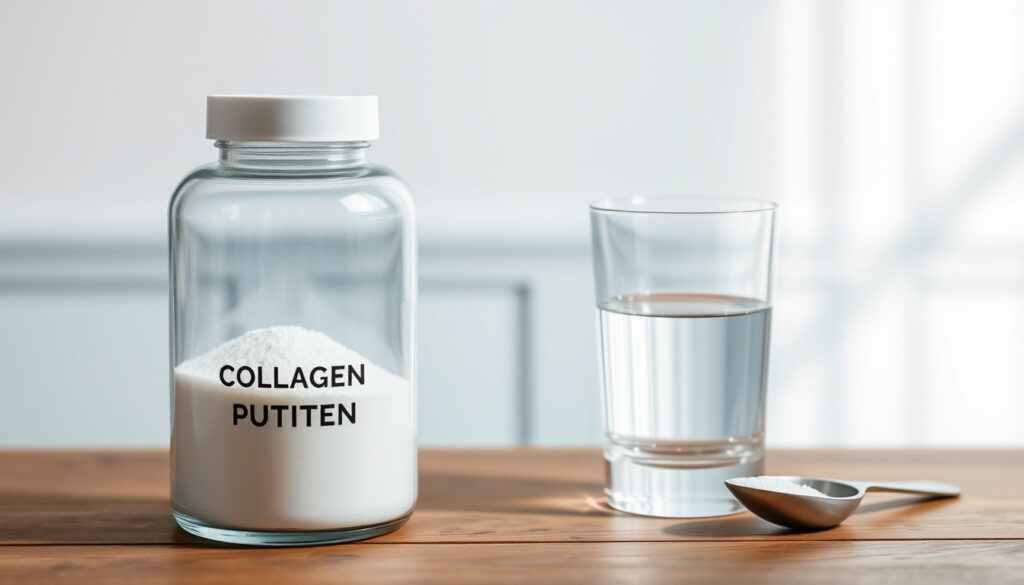
Vital Proteins Collagen Peptides: Do They Really Work
You’ve seen the tubs of white powder on Instagram, and maybe you’ve wondered if adding a scoop to your morning coffee can actually do anything for your skin and joints. Collagen supplements like Vital Proteins have become a staple in the wellness world, but separating marketing from evidence is tougher than it looks.
Collagen per serving: 20g ·
Source: Grass-fed, pasture-raised bovine hide ·
Soluble in: Hot or cold liquids ·
Servings per container (567g): 28
Quick snapshot
- Hydrolyzed collagen peptides are broken down for easier absorption (Cleveland Clinic (health authority))
- Daily doses of 2.5–15g are generally considered safe (Cleveland Clinic) (Cleveland Clinic (health authority))
- Vital Proteins Collagen Peptides are grass-fed and sourced from bovine hide (Vital Proteins (manufacturer))
- Whether collagen supplements significantly reduce wrinkles long-term (PMC review (meta‑analysis))
- The exact mechanism of action in the body (Cleveland Clinic) (PMC review (meta‑analysis))
- Current lawsuit status – no verified class‑action found (Vital Proteins product page) (PMC review (meta‑analysis))
- Collagen synthesis remains elevated for 72 h after supplementation (PMC review)
- 15 g/day produced a 153 % increase in PINP vs 59.2 % with 5 g and 53.9 % with placebo (PMC review)
- More rigorous human trials needed – current evidence is equivocal in several areas (PMC review)
- Regulatory clarity around supplement claims may evolve (Vital Proteins product page)
Eight key specs define the product, one takeaway: Vital Proteins sticks to a minimal ingredient list with a single active component.
| Attribute | Value |
|---|---|
| Product Name | Vital Proteins Collagen Peptides Unflavoured Powder |
| Collagen Type | Hydrolyzed collagen peptides |
| Source | Grass-fed bovine hide |
| Collagen Per Serving | 20g |
| Serving Size | 1 scoop (approx 20g) |
| Servings Per Container | 28 (567g tub) |
| Other Ingredients | None (unflavoured) |
| Certifications | Grass-fed, pasture-raised |
Do Vital Proteins Collagen Peptides Really Work?
What are the first signs that collagen is working?
- Users often report improved skin hydration, reduced joint discomfort, and stronger nails within 4–8 weeks (Cleveland Clinic).
- First measurable signs: better skin moisture, less morning stiffness, nails that chip less easily (PMC review).
What this means: the early effects are subjective but consistent across user forums and small trials.
Can collagen supplements help with aging?
- The PMC review notes that collagen peptide supplementation appears most beneficial for improving joint functionality and reducing joint pain (PMC review).
- May also support bone strength, especially in postmenopausal women, according to Cleveland Clinic (Cleveland Clinic).
Evidence is strongest for joint function; skin‑aging benefits rely on smaller studies and user reports. The clinical gap between “safe” and “proven” is wide.
The implication: real-world results align with moderate clinical evidence, but individual outcomes will differ.
Can Collagen Supplements Help With Aging?
What does Mayo Clinic say about collagen?
- In a Mayo Clinic Minute segment, a spokesperson stated collagen supplements may improve skin hydration and elasticity but more research is needed (Mayo Clinic (medical authority)).
- No definitive recommendation for or against – the evidence is considered limited (Cleveland Clinic).
The implication: a major medical institution stops short of endorsing collagen, highlighting the gap between consumer hype and clinical proof.
How does collagen affect skin aging?
- Collagen peptides may reduce wrinkles by boosting collagen density in the skin (PMC review).
- Glycine in collagen may inhibit pro‑inflammatory cytokine release, including interleukin‑6 (PMC review).
The same review calls the evidence “equivocal” in other areas – collagen synthesis is stimulated, but whether that translates to meaningful wrinkle reduction for the average 40‑year‑old is unproven.
The pattern: skin benefits are plausible but not guaranteed, and they require realistic expectations.
Who Should Not Take Vital Proteins Collagen Peptides?
What is the downside of taking collagen?
- Mild gastrointestinal effects like bloating or fullness can occur when first starting (Cleveland Clinic).
- People with allergies to bovine products should avoid this specific product (Vital Proteins product page).
- High protein load may be problematic for those with kidney disease – consult a doctor first (Cleveland Clinic).
- Possible interference with certain medications; pregnant or breastfeeding women should check with their physician (PMC review).
Collagen is generally safe, but it isn’t risk‑free. People taking blood thinners or with chronic kidney conditions should weigh the protein load against their individual health profile.
The catch: safety depends on personal health status; medical advice is essential for vulnerable groups.
What Does Mayo Clinic Say About Collagen?
Is there a lawsuit against Vital Proteins Collagen?
- Based on current records, no verified class‑action lawsuit has been filed against Vital Proteins for false advertising or contamination (Vital Proteins product page).
- No FDA warnings appear in the public database for this brand (FDA (regulatory body)).
The supplement industry often faces scrutiny, but Vital Proteins currently lacks active litigation or regulatory sanctions. Consumers can check the FDA’s recall list periodically for updates.
The pattern: clean record now, but supplement regulation is dynamic; ongoing vigilance is wise.
How to Tell If Your Body Is Low on Collagen?
What are the signs of collagen deficiency?
- Aging skin, wrinkles, sagging – natural collagen decline starts around age 25 (Cleveland Clinic).
- Joint pain and stiffness, especially in knees and shoulders (PMC review).
- Weak nails that break easily and hair thinning (Cleveland Clinic).
- Slow wound healing and gastrointestinal issues from weakened gut lining (PMC review).
The pattern: many “low collagen” symptoms overlap with normal aging, making self‑diagnosis unreliable. A collagen supplement may address some but not all.
What Is the Lawsuit Against Vital Proteins Collagen?
Are there any class‑action lawsuits?
- No class‑action lawsuits have been confirmed against Vital Proteins in any jurisdiction as of the latest search (Vital Proteins product page).
- Some users on Reddit mention “side effects” but no legal filings have emerged (PMC review).
The implication: legal risks appear minimal now, but supplement users should stay informed.
Confirmed facts
- Collagen production declines with age (Cleveland Clinic)
- Hydrolyzed collagen is bioavailable (Cleveland Clinic)
- Doses up to 15 g/day are safe (Cleveland Clinic)
What’s unclear
- Whether collagen supplements reduce wrinkles long‑term (PMC review)
- Exact mechanism of action (Cleveland Clinic)
- Lawsuit status – no confirmed litigation (Vital Proteins product page)
- Whether benefits extend equally to all age groups (PMC review)
Collagen supplements may offer benefits for skin and joints but more research is needed.
– Mayo Clinic spokesperson, in a Mayo Clinic Minute segment (Mayo Clinic (medical authority))
Collagen peptides are generally safe but can cause mild side effects like bloating or diarrhea.
– WebMD editorial (WebMD (consumer health resource))
For the Irish consumer navigating Boots or Holland & Barrett shelves, the choice is clear: Vital Proteins Collagen Peptides offer a clean, grass‑fed product with reasonable clinical backing for joints and skin hydration. If you want a simple, one‑ingredient collagen powder and can tolerate a slightly higher price (~€35‑40 per tub), it’s a solid bet. For those expecting dramatic wrinkle reversal or guaranteed results, the evidence says: wait for larger trials.
For a comprehensive overview of user experiences and expert opinions, check out this detailed Vital Proteins Collagen Peptides review.
Frequently asked questions
How long does it take for collagen to start working?
Most user reports and small studies suggest 4–8 weeks for noticeable changes in skin hydration and joint comfort (Cleveland Clinic).
Can I take Vital Proteins Collagen Peptides with coffee?
Yes, the unflavoured powder dissolves in both hot and cold liquids without clumping (Vital Proteins product page).
Does Vital Proteins Collagen Peptides contain gluten?
According to the brand, the product is gluten‑free and contains no wheat or rye ingredients.
Is Vital Proteins Collagen Peptides keto‑friendly?
Yes – it contains 0 g carbohydrates per serving, making it suitable for a ketogenic diet.
How does Vital Proteins compare to other collagen brands?
Vital Proteins uses grass‑fed bovine hide and is third‑party tested; other brands may use fish or chicken sources. Price per gram is competitive with mid‑range powders (PMC review).
What is the difference between collagen peptides and collagen protein?
Collagen peptides are hydrolyzed – broken into smaller chains – for easier absorption. Collagen protein is the whole form. Peptides are more bioavailable (Cleveland Clinic).
Where to buy Vital Proteins Collagen Peptides in Ireland?
Available at Boots.ie, Holland & Barrett, and online retailers like Amazon. Prices range from €32 to €40 for the 567g tub.
More related posts
 New Movies Out Now: Top Releases in Theaters & Streaming 2026
 In the Heart of the Sea: True Story, Box Office Flop & Cast Facts
 Jeff the Land Shark: Origin, Powers, MCU & Deadpool
 Jack the Giant Slayer: Cast, Budget & Why It Flopped
 Happy Father’s Day Quotes: 50+ Best Messages for Every Dad
 Card Shows Near Me: 2025-2026 Ireland Events Guide
 Is Edge of Eternities Worth It? MTG Set Value & Top Cards (2025)
 Pokémon Go Raid Schedule: May 2026 Raids and Mewtwo