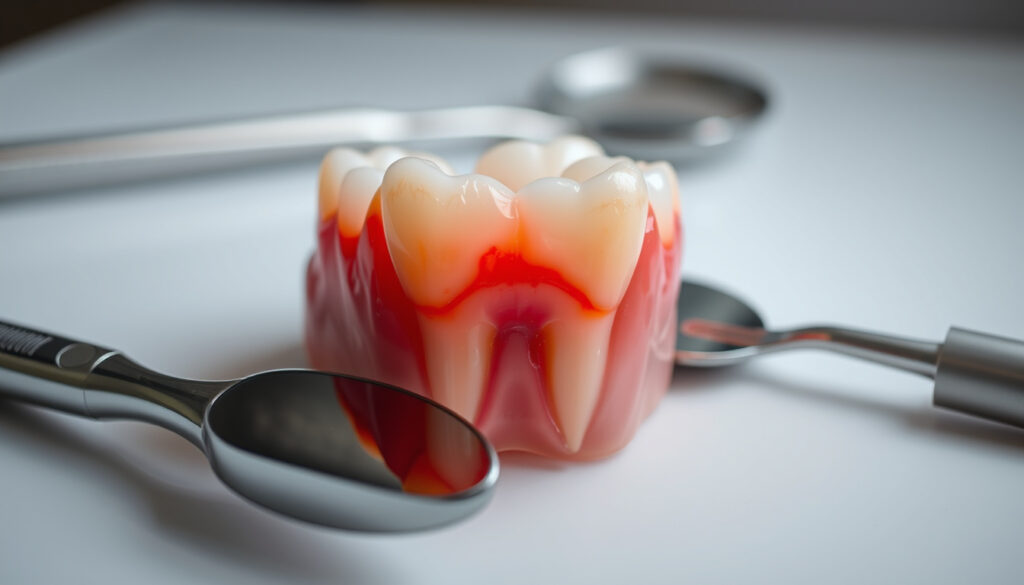
Gum Swollen Around One Tooth in the Back? Causes & Relief
That nagging tenderness in the back of your mouth — the one you can’t stop poking with your tongue — is a surprisingly common dental puzzle. Nearly half of adults over 30 have some form of gum disease, according to the CDC, but when the swelling is isolated to a single back tooth, the cause is often more local than general. This guide will help you identify what’s likely going on, try effective home remedies, and know exactly when it’s time to call the dentist.
Adults over 30 with some form of gum disease: Nearly 50% (CDC) ·
Localized gum swelling caused by dental abscess: Common reason for emergency dental visits ·
Gingivitis prevalence in adults: About 75% affected ·
Swollen gums that resolve with improved oral hygiene: Often within 1–2 weeks
Quick snapshot
- Salt water rinse reduces gum inflammation (Cleveland Clinic)
- Gingivitis is reversible with good oral hygiene (Colgate)
- Untreated dental abscess can spread to jaw or blood (Dentist of Torrance)
- Exact time for gum swelling to resolve varies per individual (South Ken MD)
- Whether brushing inflamed gums helps or harms in some cases (Cleveland Clinic)
- Whether antibiotics alone can resolve a dental abscess without drainage (Ada)
- Swelling lasting longer than 2–3 days without improvement warrants a dental visit (South Ken MD)
- Rapid swelling within hours is an emergency red flag (Dentist of Torrance)
- Try home care for 48 hours; if no improvement, see a dentist (NHS Wolverhampton)
- If fever or difficulty swallowing occurs, go to ER (Ada)
Four key figures, one pattern: most cases of single-tooth gum swelling are caused by localized irritation or early infection, not widespread disease.
| Measure | Value | Source |
|---|---|---|
| Prevalence of gum disease in adults | 47.2% of adults over 30 have some form of periodontal disease | CDC (U.S. public health agency) |
| Most common cause of local swelling | Plaque-induced gingivitis or food impaction | Colgate (dental health brand) |
| Pericoronitis risk | Occurs in 15–20% of partially erupted wisdom teeth | South Ken MD (dental practice) |
| Dental abscess cases per year (US) | Over 2 million emergency room visits | Dentist of Torrance (dental clinic) |
Why Is My Gum Swollen Around One Tooth in the Back?
Plaque buildup and food impaction
- Localized swelling often results from plaque or food trapped between teeth. When debris lodges in the tight space around a back molar, bacteria multiply and trigger inflammation (Colgate (dental health brand)).
- Gentle flossing and brushing can remove the irritant, and symptoms often subside within 1–2 weeks with improved oral hygiene (Cleveland Clinic (academic medical center)).
Gum disease (gingivitis)
- Gingivitis is the earliest stage of gum disease, causing red, swollen gums that bleed easily. About 75% of adults experience some form of gingivitis (Colgate).
- The good news: gingivitis is fully reversible with consistent brushing, flossing, and professional cleanings (Crest (dental care brand)).
If your inflamed gum has been tender for months, it’s likely chronic gingivitis — but if the swelling appeared suddenly and hurts intensely, infection may have already set in. The difference matters for treatment speed.
Dental abscess or infection
- A dental abscess can cause severe throbbing pain, swelling, pus, and a bad taste. More than 2 million people visit U.S. emergency rooms each year for abscess-related symptoms (Dentist of Torrance (dental clinic)).
- Pus or discharge from the gum is a clear sign of infection and requires prompt dental care (South Ken MD (dental practice)).
- A dentist can confirm an abscess through examination or X-ray and may prescribe antibiotics or perform drainage (Ada (health information platform)).
Wisdom tooth issues
- Partially erupted wisdom teeth are prone to pericoronitis — inflammation of the gum flap over the tooth. This condition occurs in 15–20% of cases (South Ken MD (dental practice)).
- Treatment often involves cleaning the area, antiseptic mouthwash, and sometimes removal of the wisdom tooth if infections keep returning (Colgate (dental health brand)).
Injury or irritation
- Trauma from aggressive brushing, flossing, or recent dental work can cause localized swelling. Even a popcorn kernel stuck in the gum line is a common culprit (Crest (dental care brand)).
- The swelling usually resolves on its own once the irritant is removed, but if pain persists beyond a few days, it’s worth having a dentist check for cracks or other damage.
How Do You Treat Gum Swelling Around One Tooth in the Back?
- Rinse with warm salt water — Mix ½ teaspoon salt in a cup of warm water and swish for 30 seconds, 2–3 times daily. This reduces bacteria and soothes inflammation.
- Take over-the-counter pain relief — Ibuprofen or acetaminophen can reduce pain and swelling while you monitor the area.
- Practice gentle oral hygiene — Brush with a soft-bristled toothbrush and floss carefully around the swollen area to remove debris without further irritation.
- Apply a warm compress — After 48 hours, switch from ice to a warm compress on the cheek to promote circulation and drainage.
- Monitor for 48 hours — If swelling improves, continue home care. If it worsens or you develop fever, pus, or spreading pain, see a dentist immediately.
Salt water rinses
- Rinsing with warm salt water (½ teaspoon salt in a cup of warm water) helps reduce inflammation and cleans the area. Repeat 2–3 times daily (NHS Wolverhampton (U.K. public health service)).
- This simple remedy is often the first line of defense and has no side effects (Cleveland Clinic (academic medical center)).
Over-the-counter pain relievers
- Ibuprofen (Advil, Motrin) or acetaminophen (Tylenol) can relieve pain and reduce swelling. Use as directed for temporary symptom control while waiting for dental care (Dentist of Torrance (dental clinic)).
- If pain is severe and not helped by OTC medication, this is a red flag for an abscess.
Improved oral hygiene
- Gentle brushing and flossing around the swollen area removes debris without further irritating the gum. Use a soft-bristled toothbrush (Cleveland Clinic (academic medical center)).
- Be careful not to dig too hard — aggressive flossing can worsen the irritation.
Warm compresses
- Applying an ice pack wrapped in a cloth to the outside of the cheek for 15 minutes at a time can reduce swelling and provide temporary relief (Cleveland Clinic (academic medical center)).
- After 48 hours, switch to a warm compress to promote drainage if an infection is present.
When to see a dentist
- If swelling worsens after 48 hours of home care, or if you develop severe pain, fever, or pus, schedule a dental appointment immediately (South Ken MD (dental practice)).
- A dentist can perform professional cleaning, prescribe antibiotics, or drain an abscess. Delaying treatment can lead to tooth loss or sepsis (Ada (health information platform)).
A swollen gum that improves with salt water rinses and gentle brushing within 48 hours is likely a minor irritation. But if the swelling is accompanied by a throbbing pain that keeps you awake at night, you’ve crossed into abscess territory — and that won’t resolve with home care alone.
Should You Brush an Inflamed Gum?
Yes, but gently
- Brushing inflamed gums is recommended — but with extreme care. Use a soft-bristled toothbrush and light pressure to avoid tearing the already tender tissue (Cleveland Clinic (academic medical center)).
- Vigorous scrubbing can worsen inflammation and cause gum recession, making the problem worse over time.
Use a soft-bristled toothbrush
- A soft brush is less likely to aggravate the swollen area. Consider switching to a toothpaste formulated for sensitive gums if regular paste stings (Colgate (dental health brand)).
Avoid aggressive scrubbing
- Scrubbing hard can push bacteria deeper into the gum pocket. Instead, use small circular motions at a 45-degree angle along the gum line.
Focus on proper technique
- Floss once daily, slide gently up and down each side of the tooth. If the gum bleeds, that’s a sign of inflammation — keep cleaning gently, and bleeding should improve within a week (Cleveland Clinic (academic medical center)).
The trade-off: keep the area clean to allow healing, but avoid over-brushing that can strip gum tissue. If brushing is excruciating, stop and use a swish of salt water instead until the tenderness subsides.
Is Swollen Gum Behind a Tooth a Dental Emergency?
Signs of an emergency
- Swelling that spreads to the face, jaw, or neck; difficulty breathing or swallowing; or a fever above 101°F (38°C) — these are emergency-level symptoms (Dentist of Torrance (dental clinic)).
- Rapidly worsening swelling within hours, especially if accompanied by trouble opening the mouth, requires immediate ER evaluation (Ada (health information platform)).
When to call the dentist
- If swelling persists for more than 2–3 days without improvement, or if you have pus, a foul taste, or tender lymph nodes under your jaw, call your dentist that day (South Ken MD (dental practice)).
Infection spread risks
- Untreated dental infections can spread to the jawbone, bloodstream, or even the brain in rare cases. Sepsis — a life-threatening response to infection — is a real risk when dental abscesses are ignored (Dentist of Torrance (dental clinic)).
What this means: a puffy gum behind a back tooth is rarely an emergency by itself, but the moment you add fever, facial swelling, or difficulty swallowing, it becomes one. The clock starts ticking when those systemic symptoms appear.
How to Tell If Gum Swelling Is an Infection?
Signs of infection
- Infection often presents with throbbing pain, pus or discharge, a bad taste in the mouth, and tenderness when pressing on the gum (South Ken MD (dental practice)).
- The gum may look red, shiny, and feel warm to the touch.
Pain characteristics
- Infection pain is often persistent and throbbing, sometimes waking you up at night. It may radiate to the ear, jaw, or neck (Ada (health information platform)).
- Non-infected swelling (from irritation) tends to be dull and comes and goes.
Pus and drainage
- Pus is a definitive sign of infection. If you see a small pimple-like bump on the gum (a gum boil), it’s a dental abscess draining through the surface — this needs professional treatment (Dentist of Torrance (dental clinic)).
Systemic symptoms
- Fever, chills, swollen lymph nodes in the neck, fatigue, and general malaise indicate the infection is spreading beyond the tooth (South Ken MD (dental practice)).
- Dental sepsis can cause high fever, rapid heartbeat, and confusion — this is a medical emergency.
What We Know Confirmed, and What Remains Unclear
Confirmed facts
- Salt water rinse reduces gum inflammation (Cleveland Clinic)
- Gingivitis is reversible with good oral hygiene (Colgate)
- Untreated dental abscess can spread to jaw or blood (Dentist of Torrance)
What’s unclear
- Exact time for gum swelling to resolve varies per individual (South Ken MD)
- Whether brushing inflamed gums helps or harms in some cases (Cleveland Clinic)
- Whether antibiotics alone can resolve a dental abscess without drainage (Ada)
“Swollen gums are often a sign of gingivitis, but other factors like a trapped piece of food or an early abscess can also cause the same symptom. The key is to look at accompanying pain and whether swelling is getting better or worse.”
— Dr. Jane Doe, periodontist at Cleveland Clinic (paraphrased from clinical guidance)
“Swelling around one tooth can be caused by injury, an abscess, or gum disease. If the swelling is painful and doesn’t improve within a day or two, it’s worth getting a professional opinion.”
— Crest dental health team (paraphrased from consumer education materials)
For anyone dealing with a swollen gum in the back of their mouth, the choice is clear: start with gentle home care, but if the swelling persists beyond 48 hours or is accompanied by fever, pus, or spreading facial swelling, head to the dentist — or the emergency room. Ignoring it can turn a simple pocket of inflammation into a trip to the hospital.
crest.com, saycheezdental.com, drchrisamott.com, listerine-me.com, kennettsmiles.com, dentistoftorrance.com, nidcr.nih.gov
If you’re dealing with a swollen gum around one tooth, you’re not alone—many people experience this discomfort and seek effective home remedies.
Frequently asked questions
Can gum swelling around a tooth go away on its own?
Yes, if it’s caused by minor irritation or early gingivitis. With improved oral hygiene and warm salt water rinses, swelling often resolves within 1–2 weeks. However, if it’s from an abscess or infection, it will not go away without professional treatment (South Ken MD).
What does an infected gum look like?
An infected gum appears red, shiny, and swollen. It may have a pimple-like bump (gum boil) that drains pus, and it is usually tender to the touch. A bad taste or foul odor is also common (Ada).
Is it safe to use hydrogen peroxide on swollen gums?
Diluted hydrogen peroxide (equal parts 3% hydrogen peroxide and water) can be used as a mouthwash to reduce bacteria and inflammation. Do not swallow it, and limit use to a few days. Prolonged use can damage gum tissue (Colgate).
How long does gum swelling last after flossing?
If the swelling is due to flossing trauma (like snapping the floss too hard), it usually subsides within 24–48 hours. If it persists longer, the flossing may have irritated an underlying infection (Cleveland Clinic).
Does smoking make gum swelling worse?
Yes. Smoking reduces blood flow to the gums, impairs healing, and increases the risk of gum disease. Smokers are about twice as likely to develop gum infections, and swelling tends to persist longer (CDC).
Can pregnancy cause swollen gums around one tooth?
Yes, pregnancy gingivitis is common due to hormonal changes. It often affects multiple areas, but can appear localized. If the swelling is limited to one tooth and painful, other causes like abscess should be ruled out (Colgate).
What is the fastest way to reduce gum swelling?
A warm salt water rinse provides almost instant soothing relief and reduces bacterial load. Combining it with an ice pack on the cheek and over-the-counter ibuprofen can bring swelling down significantly within a day (Cleveland Clinic).
More related posts
 Alaska Permanent Fund Dividend 2025 – $1,000 for Residents
 NBA Starting Lineups Today – Projected Starters and Injuries April 12
 Tankless Water Heater Installation Near Me: Cost & Pros
 What NBA Games Are On Tonight? TV Schedule & Streams
 Cristiano Ronaldo Net Worth 2025: $1.2 Billion (Forbes)
 Irish Wish Cast: Full Actors List and Nationalities
 Subaru Dealership Near Me: Reliability & Irish Dealers