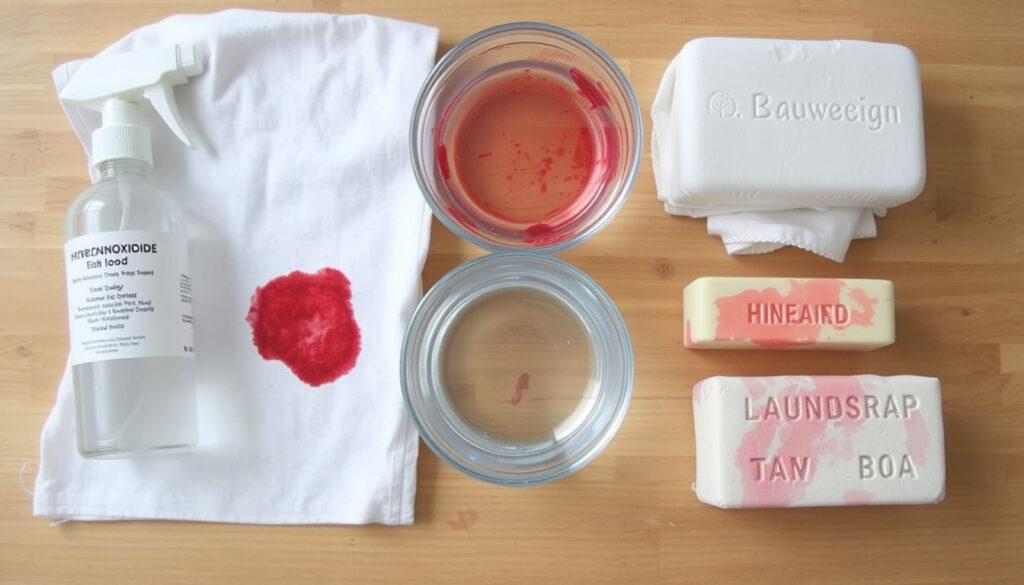
How to Get Blood Out of Clothes: Fresh and Dried Methods
Nobody plans for a blood stain, but nearly everyone hits one on a shirt, a sheet, or a pair of jeans. Blood is a protein stain that responds to cold water, enzyme detergent, and 3% hydrogen peroxide — with a cold-water soak of at least 30 minutes for dried marks recommended as the baseline (University of Georgia Cooperative Extension).
Hydrogen peroxide strength: 3% household solution ·
Dried-stain soak: several hours to overnight ·
Stain type: protein — responds to enzyme detergents ·
Enzyme dwell time: 30 minutes to an hour or more
Quick snapshot
- Flush fresh blood from the back of the fabric under cold running water as soon as possible (University of Georgia Cooperative Extension (state university extension)).
- Test 3% hydrogen peroxide on a hidden area first — it can bleach or damage some dyed fabrics (The Spruce (home-care editorial site)).
- Enzyme detergents are the recommended route for protein stains, used per label directions (American Cleaning Institute (industry trade association)).
- Whether dry cleaning removes old blood without pre-treatment.
- The long-term effect of hydrogen peroxide on fabric dyes.
- How well salt or baking soda pastes work on fully dried stains compared with enzyme products.
- Fresh stains: treat within 30 minutes (University of Georgia Cooperative Extension (state university extension)).
- Enzyme products: at least 30 minutes of dwell; older stains an hour or more (Healthline (health information publisher)).
- Launder in cold water, inspect the spot, then dry (Coles (supermarket home-care guide)).
- Repeat the cold soak plus enzyme cycle before reaching for peroxide (University of Kentucky Cooperative Extension (state university extension)).
Key facts at a glance
One pattern runs through every reliable method: cold water keeps blood protein soluble, and heat makes it bind.
| Fact | Value |
|---|---|
| Blood stain composition | Proteins and hemoglobin |
| Best temperature | Cold water (below 30°C) — hot water sets the stain |
| Hydrogen peroxide concentration | 3% typical household strength (University of Kentucky Cooperative Extension (state university extension)) |
| Time limit for fresh stains | Within 30 minutes |
| Enzyme presoak time | At least 30 minutes; older stains may need an hour or more (Healthline (health information publisher)) |
| Stubborn dried stains | Several hours to overnight in cold water (Coles (supermarket home-care guide)) |
The pattern: fresh blood is a water problem, dried blood is an enzyme problem, and peroxide is the last-resort finish.
How do you remove set-in dried blood stains?
Dried blood is still protein — it has just dehydrated onto the fiber. The strategy shifts from flushing to soaking and dissolving, and patience matters more than scrubbing.
Before anything else, scrape or brush off crusted residue without grinding it into the weave (University of Kentucky Cooperative Extension). Then set up a cool-water soak:
- Soak in cold water — Coles’ home-care guide suggests several hours to overnight for dried blood (Coles).
- Work an enzyme detergent into the stain and let it sit — the label directions matter, and set-in stains usually need more time.
- Rinse in cold water, then launder cold and inspect the spot before drying.
After the soak and enzyme round, most residues lift without bleach or harsh scrubbing. If a shadow remains, move up to the hydrogen peroxide step below.
What is the best old blood stain remover?
- An enzyme presoak or enzyme-containing detergent — the American Cleaning Institute recommends it specifically for old or dried blood, because blood is a protein stain (American Cleaning Institute (industry trade association)).
- Liquid detergents labeled for protein-based stains, applied directly to the spot.
- A long cold-water soak so the enzymes have enough dwell time.
The implication: the word “enzyme” on a label matters more than the brand name. Without it, you’re missing the one mechanism that actually digests dried blood protein.
How can I get dried blood out of clothes without hydrogen peroxide?
You don’t need peroxide for most dried stains — enzyme chemistry is the primary remover, and peroxide is the finishing move for a remaining trace.
Skip the peroxide if you want a gentler route: the cold-water soak plus enzyme detergent handles the vast majority of dried blood on washable fabrics. The key is dwell time — enzyme products need at least 30 minutes, and older stains may need an hour or more.
For silk, skip both peroxide and enzyme products. Persil recommends a salt-water treatment with cold-water rinsing instead (Persil (laundry detergent brand)).
How can I remove old blood stains from clothes at home?
- Rehydrate with a long cold-water soak — several hours to overnight when the stain is heavy.
- Apply an enzyme presoak or enzyme detergent and follow the label’s dwell time.
- Repeat the cycle instead of scrubbing harder; dried protein dissolves gradually.
The pattern: dried stains respond to patience, not power.
Will hydrogen peroxide remove blood stains?
Yes, for a remaining trace — and the University of Georgia Cooperative Extension gives a specific protocol: test an inconspicuous area for colorfastness, apply 3% hydrogen peroxide to the stain, leave it for 1–3 minutes, then rinse thoroughly (University of Georgia Cooperative Extension).
Peroxide lifts the stain through a chemical reaction rather than digesting protein the way enzymes do. That is exactly why the test step exists: the same reaction that lifts blood can lighten fabric dye.
What should you never clean with hydrogen peroxide?
- Silk and wool — enzyme products can digest protein fibers, so these fabrics need a different route altogether (University of Kentucky Cooperative Extension).
- Any fabric that fails a colorfast test — peroxide can bleach or damage the dye.
- Stronger peroxide solutions — hair-bleaching strength is not a substitute for the 3% household solution.
How can I remove blood stains from white clothes at home?
- Flush and rinse with cold water first, then apply 3% hydrogen peroxide to any remaining mark.
- Leave it for 1–3 minutes, rinse thoroughly, and launder in cold water — the same University of Georgia protocol used on other colorfast fabric.
The trade-off: peroxide is effective oxidative chemistry, but it is also a mild bleach — which is exactly why the hidden-area test is non-negotiable.
What household items remove blood stains?
You don’t need a specialty cleaner for most blood stains. The documented options are ordinary staples that work at different moments in a stain’s life.
- Liquid soap or detergent — University of Georgia Cooperative Extension says fresh blood responds to cold-water rinsing with soap or liquid detergent, repeated before laundering.
- Enzyme-containing laundry detergent for the dried-stain stage.
- A baking soda paste as a gentle home option for dried residue.
Does Dawn dish soap get blood out of clothes?
- Yes, on fresh stains — Dawn is a liquid detergent, and the soap-and-cold-water technique above is the first-line treatment.
- On dried blood, dish soap alone is usually not enough; the stain needs enzyme chemistry and dwell time.
Can Tide Pen remove blood stains?
- Stain-removal pens are built for fresh marks on the go; they don’t provide the soak time enzyme products get.
- For set-in blood, the reliable route is still a cold-water soak plus an enzyme detergent — the pen can’t replace that dwell time.
How can I get blood out of jeans?
- Denim is durable enough for the standard cold-soak and enzyme routine.
- Rinse from the back of the leg so the flow pushes the stain out of the weave, then test peroxide on an inside seam before spot-treating.
What this means: the “right” household item is less about brand and more about stain age — soap for fresh, enzymes for dried, peroxide as the last lift.
Does salt remove blood stains?
Salt is a genuine first-response tool, though its role is more about buying time than deep chemistry. Persil’s guidance for delicate fabric uses salt dissolved in cold water as a soak treatment (Persil).
- For fresh blood on silk, Persil recommends a salt-water treatment with cold-water rinsing rather than an enzyme protocol (Persil).
- For general fresh stains, a salt paste helps draw blood out before it dries; salt absorbs moisture from fresh blood.
- Rinse thoroughly after the salt treatment, then follow with soap or detergent.
- Salt alone won’t reliably lift old, dried stains — that’s the enzyme stage.
How can I get blood out of clothes fast?
- Cold water first — every minute matters with fresh blood; flush from the back of the stain.
- Rub gently with liquid soap or detergent, rinse, and repeat before laundering.
- Keep the garment out of the dryer until the stain is completely gone.
How can I get period blood out of clothes?
- The same protein rules apply — cold water, enzyme detergent, and time are the reliable trio.
- Rinse the garment in cold water as soon as possible, then follow the soak-and-enzyme routine.
The catch: salt is a bridge, not a destination — it buys time on fresh blood, but once the stain dries, enzymes do the heavy lifting.
Are old blood stains permanent?
Old does not mean hopeless. The American Cleaning Institute’s stain guide treats dried blood as a routine protein-stain problem, with an enzyme presoak as the recommended solution (American Cleaning Institute).
What makes a stain look permanent is usually heat. Once hot water or a hot dryer hits blood, the protein denatures and binds to the fiber far more stubbornly.
- Rehydrate with a cold-water soak before judging whether the stain can come out.
- Treat with an enzyme presoak, following the label’s dwell time.
- Repeat the cycle rather than scrubbing harder; protein dissolves gradually.
Will dry cleaning remove blood stains?
Dry cleaning can remove blood, but pressing and drying heat can set a stain permanently if the cleaner doesn’t pre-treat it first.
If a garment is dry-clean only, point out the stain and ask for pre-treatment before any heat is applied. That single conversation can be the difference between a removed stain and a permanent one.
How do hospitals remove blood stains?
- Hospital and institutional laundries use the same chemistry at industrial scale: enzymatic detergents to digest protein, plus peroxide-based oxygenators.
- The home version is the cold soak plus enzyme detergent routine — scaled down, same mechanism.
The implication: age is not the expiration date — heat is. If the stain never met a hot dryer, it can usually still be lifted.
How to get blood out of clothes, step by step
- Flush fresh blood from the back of the fabric under cold running water as soon as possible.
- Soak in cold water — several hours or overnight for dried, set-in stains.
- Work in an enzyme detergent and leave it — enzyme products need at least 30 minutes, and older stains may need an hour or longer (Healthline).
- For a remaining trace on colorfast fabric, apply 3% hydrogen peroxide for 1–3 minutes and rinse thoroughly.
- Launder in cold water and inspect the stain before drying — heat sets whatever remains.
- Repeat the soak-and-enzyme cycle before trying anything stronger.
Most stains resolve at step 3; steps 4 and 5 exist for the trace that lingers after the first round. That’s the full escalation protocol: cold water first, enzymes for the protein breakdown, peroxide only as the finishing move.
Confirmed facts vs. what’s unclear
Confirmed facts
- Cold-water flushing is the University of Georgia Cooperative Extension’s first-line method for fresh blood (University of Georgia Cooperative Extension (state university extension)).
- Enzyme-containing detergents are recommended for dried blood because blood is a protein stain (American Cleaning Institute (industry trade association)).
- Hydrogen peroxide can bleach or damage some dyed fabrics, so a hidden-area test is necessary (The Spruce (home-care editorial site)).
What’s unclear
- Whether dry cleaning removes old blood without pre-treatment.
- The long-term effect of hydrogen peroxide on fabric dyes.
- How well salt or baking soda pastes perform on fully dried stains compared with enzyme products.
- Whether stain-removal pens can replace enzyme dwell time on set-in stains.
What this means: the confirmed list is short because the evidence is specific — cold water, enzymes, and a tested peroxide step. Everything else is situational.
What the cleaning experts say
“A product containing enzymes can be left on a blood stain for at least 30 minutes; older stains may require an hour or longer.”
— Healthline (health information publisher)
“Hot water can set blood stains and make them more difficult to remove.”
— American Cleaning Institute (industry trade association)
“Hydrogen peroxide can bleach or damage some dyed fabrics, so a hidden-area test is necessary.”
The pattern across all three: cold water and enzyme dwell time do the heavy lifting; heat and untreated peroxide are the risks to manage.
The takeaway
Every reliable source agrees on the same sequence: cold water, enzyme chemistry, and a colorfast-tested peroxide finish — with heat as the one variable that turns a fixable stain into a permanent one. For anyone doing laundry at home, the practical rule is: keep blood stains cold and wet until the protein is gone, or the dryer will make the decision for you.
Frequently asked questions
Does bleach remove blood stains?
Bleach is not the recommended first move for blood. Because blood is a protein stain, enzyme-containing detergents plus a cold-water soak are the reliable route.
Can you use baking soda for blood stains?
A baking soda paste is a gentle home option for dried residue, but it does not have the documented track record of enzyme detergents on protein stains.
Is it safe to use hydrogen peroxide on colored clothes?
Only after a colorfast test on a hidden seam or hem — peroxide can bleach or damage some dyed fabrics.
How long should I soak blood stains?
For dried blood, several hours to overnight in cold water softens the stain (Coles). Enzyme products need at least 30 minutes of dwell time, and older stains often need more.
What detergent is best for blood stains?
An enzyme-containing detergent or enzyme presoak — follow the label directions and allow soaking time for set-in stains (HG (household cleaning brand)).
Can vinegar remove blood stains?
Vinegar isn’t part of the documented protocol; enzyme detergents and cold water are the approaches these guides recommend.
The pattern: every question points back to the same principles — cold water, enzyme dwell time, and careful use of peroxide.
Related reading
These additional resources cover related home-care topics.
More related posts
 How Cold Is It Outside? Ireland Weather Forecast Now
 DIY Fruit Fly Trap: 4 Tested Homemade Methods That Actually Work
 Grow a Garden Game: A Parent’s Guide to Safety
 Best Plug-in Hybrid SUVs: Top Picks for UK and Ireland
 Honda CR-V for Sale in Ireland – Deals on DoneDeal & More
 Cheapest Roadside Assistance Near Me in Dublin
 Estadísticas de Champions League: Récords, Goleadores y más